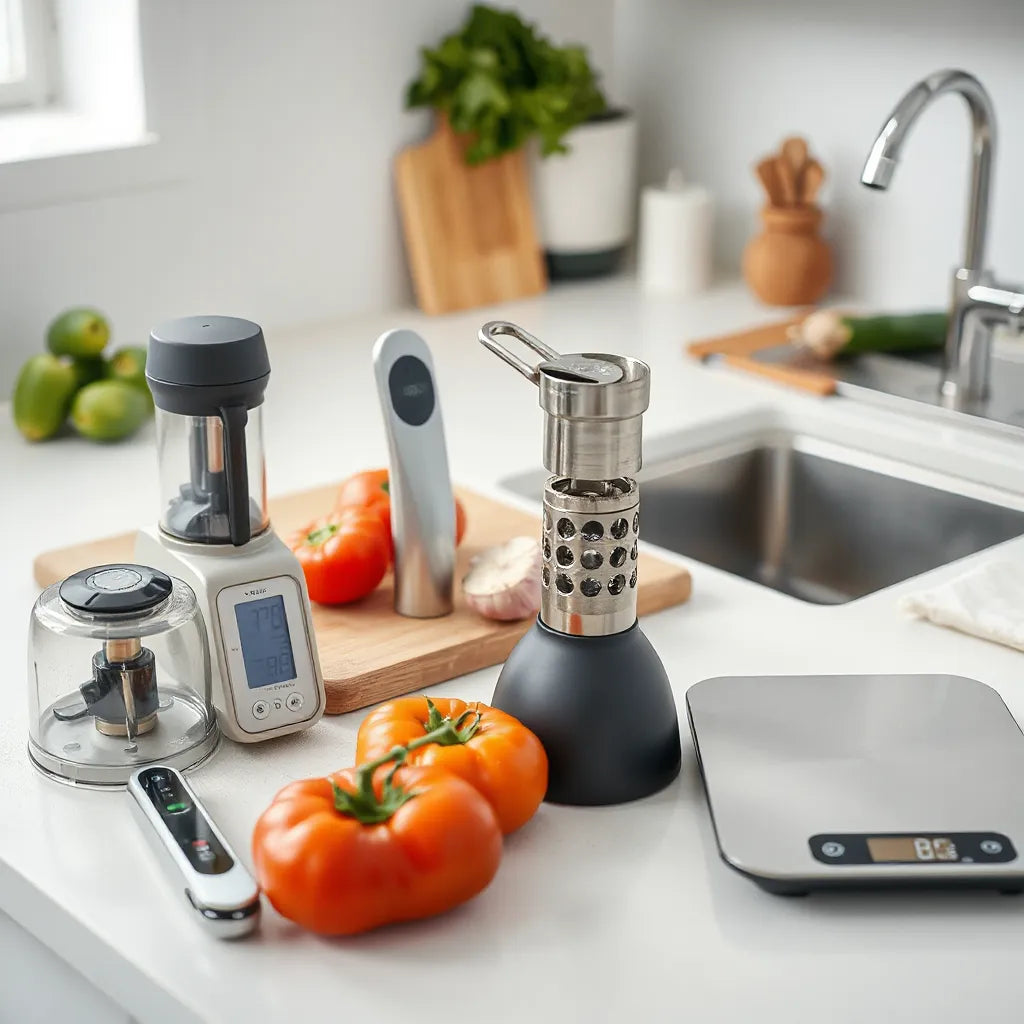
Innovative Kitchen Gadgets That Upgrade Everyday Cooking
Updated on: 2026-07-10
Innovative kitchen gadgets can simplify everyday cooking, reduce waste, and improve consistency. This guide explains how to choose tools that fit your workflow and your kitchen constraints. You will learn practical steps for integrating new devices without creating clutter or complicating storage. By focusing on safety, maintenance, and measurable results, you can upgrade your kitchen in a way that lasts.
1. Essential Tips
2. Detailed Step-by-Step Process
3. How to Evaluate Innovation in Kitchen Tools
4. High-Impact Use Cases for Smart Cooking
5. Integration and Storage Planning
6. Maintenance and Safety Considerations
7. Summary & Takeaway
8. Q&A Section
Essential Tips
- Start with one measurable goal, such as faster prep time, fewer measuring errors, or better portion control.
- Select tools that match your routines. If you rarely bake, prioritize cooking and meal prep features instead of specialized gadgets.
- Look for clear interfaces, easy cleaning, and parts that are simple to replace.
- Plan for power and storage early. Avoid devices that require dedicated space you do not have.
- Favor multi-purpose designs. A gadget that replaces several manual steps usually delivers better value.
Detailed Step-by-Step Process
Choosing innovative kitchen gadgets should resemble a practical upgrade plan rather than a trial-and-error shopping cycle.
Audit your kitchen workflow. List the tasks you repeat most: chopping, mixing, reheating, portioning, and cleaning.
Identify friction points. Examples include inconsistent results, slow mise en place, or hard-to-reach storage.
Define evaluation criteria. Use reliability, ease of use, cleaning time, and compatibility with your cookware as primary factors.
Shortlist by category. Group options into prep, cooking, storage, and cleanup so you do not duplicate functions.
Check feature relevance. Choose features that you will use weekly. Avoid novelty features that you cannot maintain.
Validate space and power needs. Measure countertop clearance, storage drawer dimensions, and outlet placement.
Adopt one change at a time. Introduce the new tool alongside an existing process to learn its impact.
Track outcomes. Record whether you actually saved time, improved consistency, or reduced waste.
How to Evaluate Innovation in Kitchen Tools
Not every “new” feature improves results. True innovation tends to reduce steps, limit human error, or improve repeatability. When evaluating innovative kitchen gadgets, focus on how the design supports real kitchens with busy schedules, limited storage, and varied skill levels.
Look for repeatability, not only speed
Many tools promise faster operation, but the more valuable improvement is consistent output. If a gadget helps you portion more evenly, maintains stable temperatures, or standardizes mixing and cooking cycles, you will notice benefits across multiple meals.
Prioritize usability and cleanability
A device that is difficult to disassemble or requires complex maintenance will fade in frequency. Clear controls, accessible components, and straightforward cleaning routines support long-term usage. Evaluate whether cleaning is realistic after a weeknight meal, not only after a weekend project.
Assess material quality and build integrity
Durability is a form of innovation. Reliable materials resist warping and wear, and well-designed joints reduce wobble and noise. When you expect frequent use, construction quality often matters more than extra features.
Confirm safety protections and operational safeguards
Kitchen environments involve heat, sharp tools, and liquids. Safety-minded designs can include stable bases, sensible cord routing, and protective covers. You should also consider whether controls reduce accidental activation.

Icons for repeatability, easy cleaning, and safety checks
High-Impact Use Cases for Smart Cooking
The best innovative kitchen gadgets address everyday needs. The following use cases deliver strong returns for most households because they reduce complexity and support steady results.
Precision prep: faster mise en place
Prep tasks often determine whether a meal succeeds. Tools that speed up chopping, slicing, or portioning can shorten the time between planning and cooking. Even when the tool does not eliminate prep entirely, improved workflow can reduce mistakes such as uneven sizes, which affect cooking time and texture.
Better heating and reheating workflows
Many kitchens struggle with inconsistent reheat results, especially when using standard methods. Devices that support even heating, controlled timing, or improved dispensing help maintain flavor and texture. For families, these improvements also reduce food waste, since reheated portions are more likely to be edible and enjoyable.
Measured storage that supports freshness
Storage is part of cooking success. When containers and systems help manage freshness and organization, you reduce the frequency of overbuying and late disposal. Smart storage solutions may include stackable designs, labeling methods, and lids that seal consistently.
Cleaning efficiency for daily maintenance
Cleanup is where time often disappears. Innovative gadgets that streamline rinsing, reduce residue, or simplify disassembly can significantly improve adherence to good hygiene practices. A clean kitchen also lowers the friction that prevents you from cooking more often.
If you want to support a kitchen upgrade beyond gadgets alone, you can also consider how layout and surfaces affect workflow. For example, a multi-functional piece of furniture can help consolidate kitchen-related items. You may find relevant options here: multi-use table with built-in refrigeration.

Kitchen workflow map from prep to cleanup
Integration and Storage Planning
Even the best innovative kitchen gadgets can fail to deliver value if they are hard to store, set up, or access. Integration planning should account for how often you will use the tool, how quickly you need it, and how it fits into existing routines.
Choose “reach-first” placement
Frequently used gadgets should live in the most convenient zones: near the prep area, close to outlets, and within arm’s reach. Storage that forces you to move multiple items before starting will reduce usage frequency.
Use category storage, not ad-hoc piles
Organize tools by function: prep, cooking, storage, and cleanup. Within each category, store small accessories in labeled compartments. This approach limits time spent searching and prevents duplicate purchases.
Plan for seasonality and bulk usage
Some devices are used more often during specific seasons or for entertaining. Store those tools more efficiently by separating “daily access” items from “occasional use” items. This reduces clutter while keeping the tools available when needed.
Minimize cable complexity
If a gadget uses power, confirm that cords are routed safely. Avoid running cords across pathways or where they may contact heat sources. Where possible, use built-in cable management or keep devices on stable, non-slip surfaces.
Maintenance and Safety Considerations
Long-term performance depends on consistent care. The most useful innovative kitchen gadgets include maintenance guidance that is practical and repeatable.
Follow cleaning instructions precisely
Cleaning should remove grease and food residue promptly. Adhere to manufacturer recommendations for water exposure, cleaning agents, and drying methods. If a gadget uses removable parts, confirm that components are dry before reassembly.
Inspect wear points regularly
Check for signs of wear at moving joints, seals, and power connections. Small issues can lead to reduced performance or safety risks if ignored. If you detect damage, stop using the tool until it is resolved.
Protect surfaces and accessories
Some tools can scratch or stain depending on materials and coatings. Use appropriate mats, lids, or storage covers to protect both the gadget and your kitchen surfaces. This also prevents micro-residue buildup that can affect odor and hygiene.
Maintain safe operation habits
Use stable placement. Keep hands away from hot zones. Ensure that lids, guards, and caps are secured before operation. When a gadget supports advanced controls, review the settings so you understand safe operating modes.
For a broader kitchen environment approach, you may also explore how heating and storage systems complement your meal flow. If your project involves a larger lifestyle upgrade, relevant selections are sometimes available on weatherproof outdoor kitchen islands. While this is not a gadget category by itself, it can support cooking consistency during gatherings.
Summary & Takeaway
Innovative kitchen gadgets deliver value when they match your routines and remove real friction. Begin with a workflow audit, select tools that improve repeatability, and confirm that cleaning and storage are manageable. Track outcomes over time so you can keep what works and refine your setup. With a deliberate approach, your kitchen upgrade becomes sustainable rather than cluttered.
Q&A Section
Which innovative kitchen gadgets provide the most value for beginners?
Beginners typically benefit most from tools that reduce measuring errors and simplify cleanup. Focus on gadgets that integrate into common tasks such as prep, portioning, mixing, reheating, and organization. If you can maintain them easily and use them weekly, they usually deliver better value than highly specialized devices.
How can I avoid buying gadgets that do not get used?
Create a short list tied to specific weekly pain points. Evaluate each option using cleaning time, setup effort, storage compatibility, and whether you will likely use the core function repeatedly. Also introduce one tool at a time so you can observe actual impact before expanding your collection.
What should I prioritize to ensure safe use of modern kitchen tools?
Prioritize stable placement, correct power setup, and clear operating instructions. Choose designs with safeguards such as secure guards, stable bases, and intuitive controls. After purchase, verify that accessories are assembled correctly and that cleaning procedures do not compromise safety features.
Are smart features worth it when choosing kitchen equipment?
Smart features are worth considering when they reduce repeatable errors or improve workflow reliability. If the technology simplifies scheduling, consistency, or monitoring, it can support better results. If the features require complex setup or frequent charging, the added effort may outweigh the benefits.
How do I maintain performance over time?
Maintain consistent cleaning routines, inspect seals and connections, and store devices in conditions that prevent damage from moisture or dust. Use the recommended accessories only, and avoid harsh cleaning methods that may degrade coatings or materials.
Can I combine multiple gadgets without making my kitchen messy?
Yes, but planning is essential. Store tools by category, keep daily-use items in reach-first locations, and reserve occasional tools for seasonal storage. Cable management and modular accessories also reduce clutter and help you maintain a clean, efficient workspace.
What internal factors should I measure after adding a new gadget?
Measure the reduction in steps, the time you save per meal, and the consistency of outcomes such as texture and portion size. Also track waste reduction, such as fewer discarded leftovers or more accurately prepared components.
Where can I learn more about related kitchen upgrades?
You can browse curated selections on SellHots for complementary home and kitchen improvements. A helpful starting point is the product ecosystem at SellHots, where you can compare items by function and style.
About the Author
SellHots contributes practical, shopping-minded guidance for improving daily living through better design and smarter functionality. Our team focuses on kitchen readiness, workflow optimization, and long-term usability. We aim to help readers make confident choices that reduce friction and support consistent results. Thank you for reading, and we wish you success with your next kitchen upgrade.
The content in this blog post is intended for general information purposes only. It should not be considered as professional, medical, or legal advice. For specific guidance related to your situation, please consult a qualified professional. The store does not assume responsibility for any decisions made based on this information.