


What if the defining feature of a steam shower room isn’t the showerhead, but the enclosure around it? It may look like a more luxurious shower, yet the experience depends on a coordinated space designed to contain steam, not simply spray water.
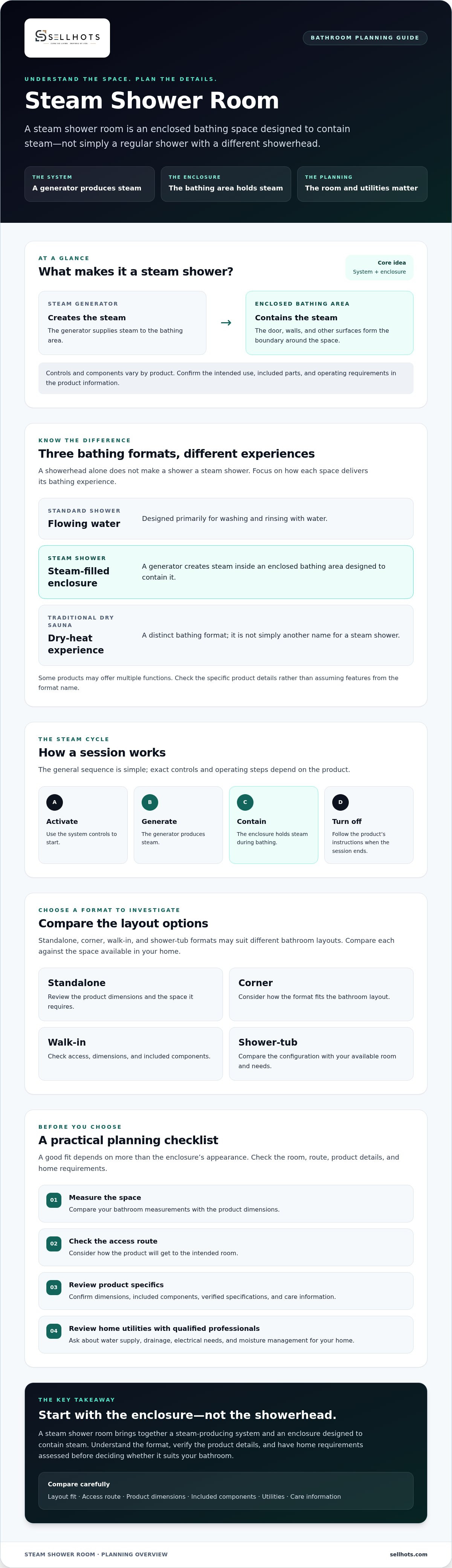
It’s easy to confuse a steam shower with a regular shower or a sauna when planning a bathroom upgrade. In a steam shower room, a generator produces steam and sends it into an enclosed bathing area. The enclosure, generator, controls, and other components work together. A conventional shower is designed primarily for rinsing with water, while a sauna offers a different kind of heat experience.
Before comparing options, understand how the steam cycle works, which design formats are available, and what your bathroom layout may need to accommodate. This guide covers the basic components and practical planning questions to help you assess whether a steam shower room suits your home.
Key Takeaways
- Understand how a steam shower room differs from a standard shower: it generates steam and uses an enclosure designed to contain it.
- Compare standalone, corner, walk-in, and shower-tub formats by considering how each may fit your bathroom layout.
- Before choosing a design, measure the space, check the access route, and review product dimensions and included components.
- Ask qualified professionals to assess water supply, drainage, electrical needs, and moisture management for your home.
- Compare product listings carefully, including verified specifications and care information, before narrowing your options.
Steam Shower vs. Regular Shower: Key Differences
A steam shower room is an enclosed shower space designed to contain steam during bathing. Unlike a standard shower, which delivers water for rinsing, it uses a steam-producing system to fill the enclosure with steam. The difference is both in the bathing experience and in how the room is designed to contain it.
What makes a shower room a steam shower room?
The enclosure and steam-producing system work together: the system generates steam, and the enclosed bathing area holds it during use. Components and features vary by product, so the term doesn’t mean every unit has the same controls, fittings, or configuration. A familiar shower layout may be part of the design, but the space is intended to do more than direct water toward a drain.
This is the core idea behind a Steam shower: an enclosed shower adapted for steam bathing. Understanding that principle helps distinguish the room type from optional features or a particular product design. Assess those details individually rather than assuming them from the name alone.
Steam shower room versus standard shower and sauna
A regular shower is primarily for washing with flowing water. A steam shower adds a steam cycle within an enclosure, changing the atmosphere of the bathing space. Both formats may include a showerhead, but a showerhead alone doesn’t make a shower a steam shower. The steam-producing system and an enclosure designed to contain the steam are central to the difference.
A sauna is another distinct bathing format, not simply another name for a steam shower. Steam bathing takes place in a steam-filled enclosure, while a traditional dry sauna is associated with a dry-heat experience. The formats differ in how heat and moisture are experienced, so consider which environment you want rather than assuming one room provides both. Some products may combine or offer multiple functions, but confirm their actual features in the product information.
For now, focus on the concept rather than selecting a model or planning installation. Ask whether you’re looking for an ordinary shower, an enclosed space designed for steam bathing, or a sauna experience. Once that distinction is clear, it’s easier to compare room formats and investigate the specific components and requirements covered below.
How Does a Steam Shower Room Create and Contain Steam?
A steam shower room follows a simple sequence: you activate the system, the generator produces steam for the enclosed space, the enclosure helps contain it during bathing, and the system is turned off when the session ends. Controls and components vary by product, so treat this as a general explanation rather than a description of every model.
The role of the steam generator and controls
The steam generator is the system’s core component. It produces steam and supplies it to the bathing area. Controls let the user start and manage the experience, but their placement and functions aren’t universal. Check the product details to confirm what’s included and how the system operates.
The enclosure matters because steam needs a contained space. Its door, walls, and other surfaces form the boundary around the bathing area, though the exact design depends on the product. Don’t assume a regular shower enclosure is suitable for steam use just because it has a door. Confirm the unit’s intended use and requirements.
Planning also involves your home’s utilities. Water supply, drainage, electrical needs, and moisture management can depend on the product and room. Have qualified professionals review those requirements before assuming the system is compatible with your space. Product documentation and professional guidance are the right sources for connection, performance, and preparation details.
What happens during a steam shower session?
In general, the user activates the system through its controls, the generator creates steam, and the enclosed space holds the steam while the person bathes. At the end of the session, the user turns the system off according to the product’s instructions. Session duration and operating steps vary, so follow the specific product guidance rather than relying on a general rule.
This differs from a conventional shower, where water flows from the showerhead for rinsing. A steam session centers on the steam-filled enclosure. A showerhead may also be present, but it serves a separate water-based function. Comfort is personal, and this overview makes no medical promises. For a health-focused discussion, see WebMD’s overview of health benefits of steam, and consult a qualified health professional with personal concerns.
Once you understand the sequence, browsing steam and sauna room options can help you compare how different products describe their controls, included components, and room requirements.
Which Steam Shower Room Formats and Features Shape the Experience?
A steam shower room can take several forms, each creating a different relationship between the enclosure and the rest of the bathroom. The right format depends on your layout and the product’s actual dimensions, not the category name alone. Use these options to guide what you investigate.
How layout changes the kind of steam shower room to explore
A standalone enclosed format keeps the bathing space within its own unit. A corner format is designed for placement in a corner, while a walk-in layout may have a more open entrance. A shower-tub combination brings bathing functions together in one footprint. These labels are a starting point, not confirmation that a particular unit will fit or function in your bathroom.
Compare the listed footprint with the space where you plan to put the unit. Also check the entry and door operation against nearby fixtures and available clearance. Review the product’s actual dimensions and access details before deciding whether a format suits the room.
| Format | General layout implication | Questions to investigate |
|---|---|---|
| Standalone enclosed | A separate enclosed bathing unit | What are the full dimensions, and how does the door open? |
| Corner | Designed for placement at a corner | Do the footprint and entry work with nearby fixtures? |
| Walk-in | Uses an entry designed for walk-in access | What space does the entrance require, and how is the enclosure configured? |
| Shower-tub | Combines a shower area and tub in one format | What are the overall dimensions, and which functions are included? |
Which optional features matter to your routine?
The core purpose is steam bathing in an enclosed space. Features such as a seat, lighting, audio, or jets are optional considerations, not standard inclusions across all products. Evaluate each separately: would it support how you plan to use the room, and is it straightforward to operate and care for?
- Seating: Check whether a seat is included and whether its placement works for you.
- Lighting and audio: Confirm which features are present and how they’re controlled.
- Jets: Verify whether the product includes them and what they’re intended to do.
Prioritize features you expect to use, then review their care instructions and controls. Compare verified dimensions, included components, and feature details for each option. This grounds your choice in your space and routine rather than assumptions based on a product label.
What Should You Consider Before Planning a Steam Shower Room?
Before choosing a steam shower room, check how the unit will fit your bathroom and what the specific product requires. Preparation varies with the system and the existing room, so don’t assume a format will be simple to accommodate based on its category or appearance.
Assess the room, access, and product dimensions
Start with the intended location, then check the route components would need to take into the bathroom. A unit may fit the planned space but still be difficult to move through a doorway or around a turn. Compare your measurements with the product documentation, including stated dimensions and access details.
Use this sequence to organize your early checks:
- Measure the intended area. Record the available space and note nearby fixtures that may affect placement.
- Review the access route. Check doorways and turns between the entry point and the bathroom.
- Compare the exact specifications. Use the product documentation, not general format labels or dimensions from another listing.
Discuss utilities, moisture, and installation with qualified professionals
Once you have a product in mind, use its documentation to identify requirements that need review. The bathroom’s current condition and the chosen system can affect the preparation involved. Ask qualified professionals to assess the relevant parts of your home before deciding the space is ready.
- Water supply and drainage: Confirm what the selected system requires and whether the existing bathroom can accommodate it.
- Electrical supply: Have a qualified professional review the product’s stated electrical needs and the room’s existing setup.
- Moisture management: Discuss how the enclosure and surrounding bathroom should be prepared for the intended use.
Before purchase, check the space, access route, product documentation, utilities, and moisture management. Confirm product-specific requirements with the seller and relevant qualified professionals. These checks support planning, but they don’t replace professional advice or establish that installation is suitable.
With your measurements and questions in hand, explore steam and sauna room options and compare available product information against your room’s needs.
How to Explore Steam Shower Room Options with Confidence
Now that you understand how a steam shower room works, compare options by moving from the system basics to room formats, then checking each listing for product-specific details. A side-by-side review helps separate confirmed information from assumptions based on a photo or broad description.
A calm checklist for comparing product listings
Review listings using the same questions for each option. Focus on specifications and care information that can help you judge whether a product fits your space and routine.
- Format and dimensions: Confirm the layout type and compare the product’s stated measurements with your available space.
- Included components: Check what comes with the unit rather than assuming a pictured feature is included.
- Utility requirements: Look for documented water, drainage, and electrical needs, and note anything that remains unclear.
- Care information: Review the available guidance for cleaning and maintaining surfaces and components.
Product photos can help you picture a design, but they don’t establish dimensions, included components, or technical requirements. Give more weight to verified specifications and written product information. If a listing doesn’t answer an important question, contact customer support for clarification before comparing it with other options.
When to continue researching and when to browse
If you’re unsure whether your room or its utilities can accommodate a particular system, pause product comparisons and seek an assessment from relevant qualified professionals. Confirm how the selected product’s requirements relate to your bathroom before committing to a format. This keeps your next step informed without assuming every product or existing room is alike.
For a coordinated bathing space, consider how other fixtures will work with the overall layout. If a tub is part of your plans, this freestanding bathtub buying guide offers a related perspective for comparing that element of the room.
Once you’ve clarified your space, preferences, and questions, browse the SellHots bathroom products, including its Steam & Sauna Rooms category, to explore available options.
Choose Your Next Step with Clarity
A steam shower room is easier to evaluate once you understand how its enclosure and steam system work together. The right format depends on your bathroom layout. Product dimensions, included components, care details, and utility requirements help you compare options with confidence.
Before deciding, measure the intended space and review the specific product information. If questions remain about room suitability, utilities, or moisture management, seek guidance from qualified professionals. A considered approach helps you choose an option that reflects both your home and your routine.
When you’re ready to explore, SellHots lists Steam & Sauna Rooms among its product categories, with curated product discovery and customer-first support. Explore SellHots bathroom products and take the next step at your own pace.
Your ideal bathroom begins with informed choices. Explore thoughtfully, and let each decision bring your space closer to the experience you want.
Frequently Asked Questions
What is a steam shower room?
A steam shower room is an enclosed bathing space designed to contain steam during use. It differs from a standard shower because it includes a steam-producing system, rather than relying only on water flowing from a showerhead. Layouts and features vary, so check the specific listing to understand what’s included and how the enclosure is intended to be used.
How does a steam shower room work?
A steam shower room uses a generator to produce steam for an enclosed bathing space. The user activates the system through its controls, and the enclosure helps contain the steam during the session. Operating steps and controls vary by product, so follow its instructions. Confirm the product’s utility and room requirements before choosing a model.
Can a steam shower room fit in a regular bathroom?
It may fit, but suitability depends on the available space, the product’s dimensions, access routes, and the bathroom’s existing conditions. Measure the intended area and any doorways or turns along the route into the room. Compare those measurements with the exact product documentation. If you’re unsure whether your bathroom can accommodate the system, ask qualified professionals to assess utility and moisture-management needs.
Is a steam shower room the same as a sauna?
No. A steam shower room creates a steam-filled bathing environment, while a traditional dry sauna offers a dry-heat experience. They are distinct formats, even though some products may combine functions. Don’t assume a steam shower includes a sauna function, or vice versa. Check the product description and included components to confirm which bathing experiences it offers.
What components does a steam shower room need?
The core elements are an enclosure intended to contain steam and a steam generator that produces it. Controls provide the user interface, while other components and features vary between products. Water supply, drainage, and electrical needs may also apply, but don’t assume every system has the same requirements. Review the product documentation and confirm what’s included before comparing options.
Do steam shower rooms need special ventilation or electrical work?
Requirements depend on the chosen system and the existing bathroom. Electrical supply, ventilation, and moisture management are important topics to review, but specific needs shouldn’t be assumed from a general product description. Read the product documentation and ask qualified professionals to assess the room and utilities. Their guidance can clarify any preparation needed for the particular system you’re considering.
Can you use a steam shower room as a regular shower?
Some products may include a conventional shower function, while others may have a different configuration. Check the listing to confirm whether a showerhead is included and whether the product is designed for regular water-based showering as well as steam bathing. Verify how the controls operate and review the care instructions. Don’t rely on product photographs alone to confirm a function.