Outdoor Cooking Equipment Essentials for Every Backyard
Updated on: 2026-06-26
Outdoor cooking equipment determines how reliably you can grill, smoke, or sear beyond the home kitchen. The right setup improves temperature control, reduces prep friction, and supports safer food handling. When materials and storage options are selected thoughtfully, your cooking station stays usable through changing weather. This guide explains how to choose key components, plan layout, and maintain performance year after year.
Table of Contents
1. Outdoor cooking equipment basics
2. Product spotlight: a weather-ready grill station
3. Did you know?
4. Pros & cons analysis
5. Setup and layout for smoother cooking
6. Fuel, power, and heat management
7. Maintenance that protects performance
8. FAQ
9. Conclusion and CTA
Outdoor cooking equipment basics: how to choose with confidence
Outdoor cooking equipment includes the grill or cooktop, heat sources, cookware, accessories, and the storage system that keeps everything functional. Buying one item rarely creates a complete cooking experience. Instead, performance comes from how well each component supports steady heat, efficient food prep, and safe serving.
Start with your cooking goals. Many households want weekend grilling with consistent results. Others need a compact setup for small patios and balcony spaces. If you often cook for guests, you may prioritize larger cooking surfaces and prep space. If you cook lean proteins, vegetables, and side dishes, you will benefit from accessories that help with even doneness and controlled browning.
Then confirm compatibility with your space. Measure your available area and account for clearance around the cooking surface. Consider wind exposure and how far you can place heat away from walls, furniture, and doors. Finally, evaluate whether you will store the equipment outdoors. Weather exposure should influence material selection and cover choices.
Product spotlight: a weather-ready grill station
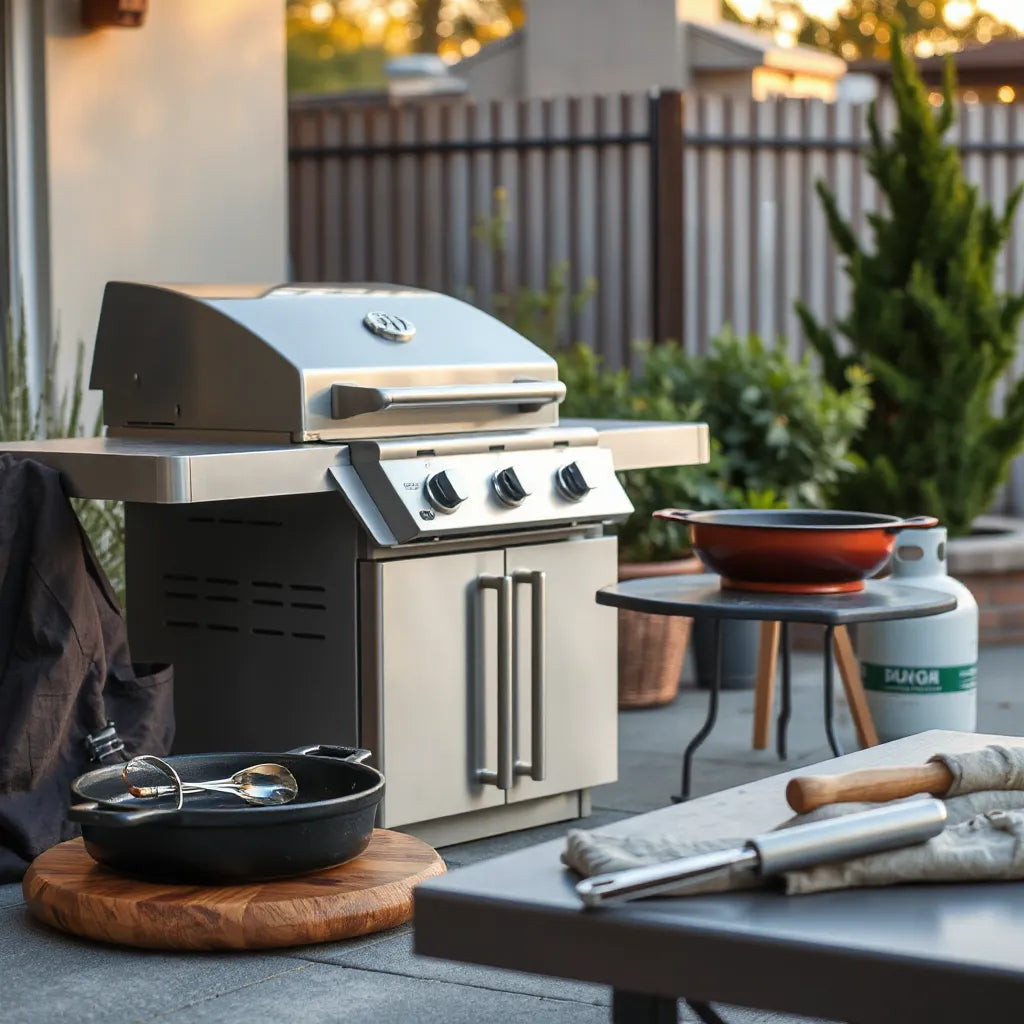
A grill station is the practical centerpiece of outdoor cooking equipment for many customers because it combines cooking control with a stable workspace. When a grill station is designed for outdoor use, it typically features corrosion-resistant materials and a layout that supports both cooking and serving. The best stations also help you manage heat zoning, because multiple burners or adjustable controls allow you to sear and then finish at a steadier temperature.
If you want a dedicated outdoor area for entertaining, consider a stainless steel BBQ island style unit with weatherproof intent. This category is often selected for patio parties because it supports larger cooking capacity and reduces the need to move items during service. For a relevant example, you can browse a weatherproof outdoor grill kitchen island on SellHots: weatherproof grill kitchen island.

Illustration of stable grill workflow and prep zones
What to evaluate in a grill station
Not every grill station performs equally in real-world use. Look beyond surface appeal and check the practical factors that influence daily use.
- Heat control: adjustable burners and stable temperature help you manage searing and gentle finishing.
- Material resilience: stainless steel and weather-focused finishes reduce rust risk and support easier cleaning.
- Workspace planning: built-in prep space and storage can reduce clutter and shorten cooking cycles.
- Service convenience: side shelves, tool hooks, and nearby serving areas improve flow when guests are waiting.
Did you know?
- Wind changes cooking outcomes: gusts can shift flame behavior and increase temperature swings, especially on open setups.
- Heat distribution matters more than size: a well-distributed cooking surface often produces more even results than a larger, uneven layout.
- Smaller accessories drive consistency: thermometers, quality tongs, and a dependable grill brush can reduce inconsistent doneness.
- Cleaning habits extend tool life: routine maintenance prevents grease buildup, which can cause flare-ups and uneven heating.
Pros & cons analysis: common outdoor cooking equipment categories
Different categories suit different patios, cooking styles, and budgets. Use the comparison below to align choices with your priorities.
| Category | Pros | Cons |
|---|---|---|
| Gas grills | Fast ignition, easier temperature control, and consistent cooking for frequent use. | Requires fuel storage and connection management; outdoor cover still matters. |
| Charcoal grills | Strong flavor profile and high heat potential for searing. | More variable temperature; ignition and cleanup require extra time. |
| Electric grills | Convenient start-up, often compact, and easier temperature management indoors and outdoors. | Power access is required; heat output and wind resistance vary by model. |
| Outdoor cooktops and griddle plates | Excellent for pancakes, vegetables, and wide-item cooking with controlled surface heat. | May not replace a full grill; requires careful surface seasoning and cleaning. |
Setup and layout for smoother cooking
Even high-quality outdoor cooking equipment can underperform if the layout creates bottlenecks. Your station should minimize unnecessary movement and reduce time spent crossing paths with hot items. Plan in zones: cooking, prep, and cleanup. Keeping these zones logically separated supports safety and speed.
Begin with a stable cooking base. A level surface protects burners and prevents greasy drips from collecting in unwanted areas. Add tool access near the cooking area. Tongs, spatulas, and grill brushes are used repeatedly, so having them within arm’s reach reduces delays.
For food prep, use heat-resistant surfaces and consider a dedicated cutting board area. If you frequently cook raw meat and vegetables, separate surfaces and utensils help maintain hygienic handling. Include a place for cooling or resting items and a clear pathway for guests waiting to be served.
Storage and covers
Storage is the hidden performance driver. If tools and accessories remain exposed, they degrade faster. Choose a cover system that fits well and allows airflow to reduce trapped moisture. For modular stations, store grates and removable components dry. Keep replacements like thermometers and fuel adapters in sealed bags or a weatherproof container.
If you want to incorporate practical styling and outdoor functionality, you can also explore Samara Designs Studio for layout inspiration and design-minded outdoor space considerations.

Diagram of heat zones, storage, and airflow flow
Fuel, power, and heat management
Heat management is a core requirement for reliable outcomes with outdoor cooking equipment. Temperature swings lead to undercooked centers, dry proteins, or burned edges. The goal is controlled zones. You can create zones by adjusting burners, using indirect cooking methods, or arranging coals to concentrate heat in one section.
Practical heat strategies
- Two-zone cooking: one side for searing and another side for finishing helps reduce flare-ups.
- Preheating: preheating grates improves sear consistency and reduces sticking.
- Use of lids: lids retain heat and support more even cooking, especially for thicker cuts.
- Thermal measurement: a probe thermometer gives accurate internal temperature monitoring for consistent results.
Fuel selection considerations
Fuel choice affects convenience, flavor, and cleanup. Gas systems are efficient for frequent grilling because they ignite quickly and offer straightforward control. Charcoal systems can deliver a distinct flavor, but they require careful airflow management and more attention during start-up and cleanup.
Electric setups can be useful where fuel storage is restricted or where compact patios limit options. Consider your power source distance and use appropriate outdoor-rated extension accessories only when needed and permitted. Regardless of fuel type, follow manufacturer safety guidance for connection, placement, and ventilation.
Maintenance that protects performance
Maintenance is what preserves cooking quality. Outdoor environments include rain, salt air, dust, and temperature cycles that can stress materials. A maintenance routine reduces corrosion, supports consistent heating, and helps prevent flare-ups caused by grease buildup.
After each cooking session, allow the cooking surface to cool before cleaning. Remove food residue with a grill brush designed for your grate material. For stainless steel components, use appropriate cleaners that do not damage protective finishes. Empty grease containers and wipe surrounding areas to keep airflow clear.
Seasonal care
Before long storage periods, inspect hoses, connectors, and seals for wear where applicable. For charcoal units, clean ash thoroughly and cover the unit to prevent moisture penetration. For electric components, keep connections dry and store detachable parts in sealed storage.
Finally, protect your accessories. Coats and seasonings help with nonstick surfaces, and covers prevent corrosion on tools and shelves. Regular care is not optional if you want outdoor cooking equipment to deliver stable performance across multiple seasons.
FAQ: outdoor cooking equipment
What is the most versatile choice for outdoor cooking equipment?
Gas grills and multi-burner stations are often the most versatile because they support quick start-up and steady heat control. For additional flexibility, pair a grill base with accessories such as a grill pan, griddle plate, and a reliable thermometer for consistent results.
How do I prevent uneven cooking on my outdoor grill?
Uneven cooking typically comes from heat distribution problems, poor preheating, or cooking items directly over the hottest zone. Use two-zone cooking, preheat the grill with the lid closed, and consider positioning thicker pieces over indirect heat until internal temperatures are correct.
How should I store outdoor cooking equipment during wet seasons?
Use a breathable cover designed for outdoor use, and ensure components are dry before storage. Store removable parts, such as grates and tool sets, in a sheltered area when possible. This reduces trapped moisture and slows corrosion.
Do I need a thermometer for outdoor cooking?
A thermometer is one of the most practical accessories for consistent cooking. Internal temperature measurement reduces guesswork and helps you achieve repeatable doneness for poultry, beef, and pork, especially when wind and outdoor temperature vary.
Conclusion and CTA
Choosing outdoor cooking equipment is not only about purchasing a grill. It is about building a complete cooking workflow that supports heat control, safe food handling, and dependable cleaning. When your station includes the right tools, sensible layout, and weather-aware materials, outdoor cooking becomes more consistent and less stressful.
If you are ready to refine your setup, start by selecting a stable cooking centerpiece and then add accessories that improve measurement and convenience. Use durable covers, plan storage, and maintain your equipment after each use to protect performance for seasons to come.
About the Author
SellHots is a retail and content community focused on product discovery and practical buying guidance for home and outdoor living. Our team contributes expertise in selection strategy, usability-focused product evaluation, and content that helps customers choose with clarity. Thank you for reading, and we invite you to explore outdoor cooking upgrades that align with your space and cooking goals.
Disclaimer: This article provides general guidance on selecting and maintaining outdoor cooking equipment. Always follow the safety instructions and operating guidelines from the manufacturer and local regulations before use.
The content in this blog post is intended for general information purposes only. It should not be considered as professional, medical, or legal advice. For specific guidance related to your situation, please consult a qualified professional. The store does not assume responsibility for any decisions made based on this information.