


The most striking freestanding bathtub may not be the right one for your bathroom. A sculptural silhouette can catch the eye, but a good choice starts with the room’s dimensions and the way you like to bathe. Shape and finish matter, but so do comfortable proportions, the tub’s material, and a practical route from delivery to installation.
This guide explains how common shapes affect a bathroom’s look and feel, what to compare in product specifications, and how to check a tub’s footprint against your available space. The goal is a choice that works in your home, not simply one that looks appealing in a photo.
Before ordering, confirm measurements, plumbing placement, delivery access, and installation arrangements. Product dimensions and features vary, so check the listing for the tub you’re considering and plan installation separately. With a clear understanding of fit, comfort, and practical requirements, you can choose a freestanding bathtub that suits your home.
Key Takeaways
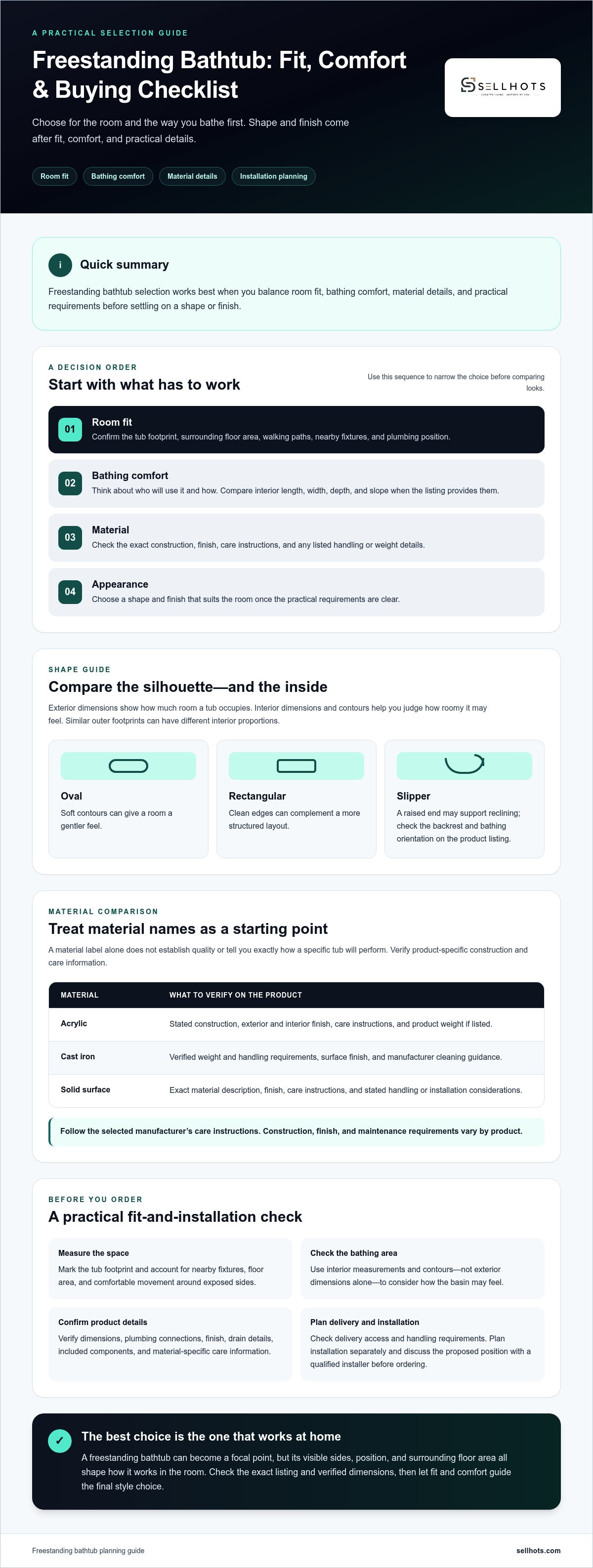
Choose a freestanding bathtub by balancing room fit, bathing comfort, material details, and practical requirements before settling on shape and finish.
- Compare oval, rectangular, and slipper shapes by their appearance and how you prefer to bathe.
- Use general material characteristics as a starting point, then verify the tub’s material and care details on its product listing.
- Check interior bathing space as well as exterior dimensions. The outer footprint alone won’t show how roomy a tub will feel.
- Before ordering, confirm the finish, drain details, included components, and delivery requirements.
- Make your choice in this order: room fit, bathing comfort, material, then appearance.
Is a Freestanding Bathtub Right for Your Bathroom?
A freestanding bathtub has finished exterior surfaces that remain visible, rather than being enclosed by a built-in surround. Its open, sculptural presence can make it a focal point and give the bathroom a considered feel. It also means the tub’s position, surrounding floor area, and exposed sides all contribute to the room’s design.
Consider more than appearance. Think about whether people can move comfortably around the tub, whether you can reach the areas that need cleaning, and how the tub will connect to existing plumbing. A layout that looks spacious on a plan may feel different once the tub and nearby fixtures are in place. Suitability depends on accurate room measurements, household needs, and the product’s verified dimensions and connection details.
How Does a Freestanding Bathtub Differ from a Built-In Tub?
A freestanding model isn’t designed to sit within a built-in surround. Its finished exterior is visible, so the tub can be viewed from multiple sides and placed as a distinct element in the room. Many built-in tubs, by contrast, have one or more sides enclosed by a surround for a more integrated appearance. The History of the bathtub offers context on how freestanding forms have evolved. Neither format is automatically more practical. The right choice depends on your room and how you plan to use the tub.
Who Might Prefer a Freestanding Bathtub?
Some shoppers want the bath to stand out, while others prefer a quieter look that blends with surrounding fixtures. Your bathing routine matters, too. Consider how often the tub will be used, who will use it, and what feels comfortable. A freestanding design may suit a room with space for its visible sides and room to move around it. In a tighter layout, that same presence may limit circulation or access.
Picture the tub in your bathroom, rather than considering it in isolation. Mark out its footprint, account for nearby fixtures and walking paths, and think about how you’ll clean around it. Then check the product listing for confirmed measurements and plumbing details, and discuss the planned position with a qualified installer before ordering. Let practical fit and personal comfort lead; appearance can complete the decision.
Freestanding Bathtub Shapes and Materials: Compare What Matters
A freestanding bathtub’s silhouette helps define its look, but the interior contours, dimensions, material details, and care instructions are what help you judge how well it will suit daily use.
Which Freestanding Bathtub Shape Suits Your Preferences?
Oval tubs have soft contours that can give a room a gentler feel. Rectangular forms tend to look more architectural, with clean edges that may complement a structured layout. Slipper designs may have one raised end intended to support a reclined position, but the backrest shape and bathing orientation vary. Check the product details rather than relying on the style name alone.
Look beyond the outline. Exterior dimensions tell you how much room the tub occupies, while interior measurements and contours help you judge the bathing space. Compare the basin’s length, width, depth, and slope where those details are provided. Two tubs with similar exterior footprints can have different interior proportions.
How Should You Compare Bathtub Materials?
Acrylic, cast iron, and solid surface are useful categories to compare, but they don’t guarantee how a particular tub will perform. Construction, finish, and care requirements vary between products. Resources on common bathtub materials can provide general context, but the manufacturer’s documentation should guide decisions about a specific model.
A material label alone doesn’t establish a tub’s quality. Compare verified product details, construction, and care guidance. Use this table as a checklist, not as a substitute for product specifications.
| Material | What to check on the product |
|---|---|
| Acrylic | Confirm the stated construction, exterior and interior finish, care instructions, and product weight if listed. |
| Cast iron | Check the verified weight and handling requirements, surface finish, and manufacturer’s cleaning guidance. |
| Solid surface | Review the exact material description, finish, care instructions, and any stated handling or installation considerations. |
For any material, look for clear product-specific information rather than assuming a category guarantees a particular surface feel, maintenance routine, or ease of handling. Follow the selected manufacturer’s care instructions, especially when choosing cleaning products. Compare the verified dimensions and features of the tubs under consideration, then browse bathtub options with your room and bathing priorities in mind.
Will a Freestanding Bathtub Fit? Measure Before You Choose
A freestanding bathtub needs more than a footprint that fits on paper. Check how it will sit beside other fixtures, whether there’s comfortable room to move around it, and whether it can be brought into the bathroom. Planning for both form and function is also reflected in the evolution of interior architecture.
What Should You Measure Before Buying a Freestanding Bathtub?
Measure the space in stages and record the results. This makes it easier to compare your room with the product details instead of choosing by appearance alone.
- Measure the room. Note the available floor area and the positions of doors, windows, and other fixed features. Sketch a possible tub location.
- Check nearby fixtures. Measure the space around sinks, toilets, showers, and storage. Consider walking paths, access to fixtures, and room to clean the tub’s exposed sides.
- Compare tub dimensions. Check the listed length, width, and height against your plan. Review interior measurements and contours too. Exterior dimensions show how much floor space the tub occupies, but not how much usable bathing room it provides.
- Trace the delivery route. Measure doorways and consider tight turns, hallways, and stairs between the entrance and bathroom. Confirm the product’s handling dimensions and any delivery requirements before ordering.
A paper outline or removable floor markers can help you picture the tub’s scale and check whether movement around it feels comfortable. Leave room to use nearby fixtures as intended, rather than treating every unoccupied patch of floor as available space.
How Can Plumbing and Floor Considerations Affect Placement?
Locate the existing drain and water connections before settling on a position. Their locations may affect where the tub can go and whether plumbing changes are needed. Connection details vary by product, so compare the listing and manufacturer information with the bathroom’s existing setup. Don’t assume one drain position will suit every model.
If the planned location requires plumbing changes, or you’re unsure whether the floor can support the selected tub, seek advice from a qualified professional before ordering. Requirements depend on the product and the home. Product purchase and installation arrangements are separate, so confirm who will assess the space and coordinate any work before the tub arrives.
Freestanding Bathtub Buying Checklist: Comfort, Care, and Product Details
A freestanding bathtub is a considered purchase, so review the product details alongside your comfort and care priorities. A checklist can help you spot missing information and confirm that the tub suits your bathing routine and delivery plans.
Which Details Should You Confirm on a Bathtub Product Page?
Verify the details for the specific tub rather than relying on assumptions based on its style or material category. Check:
- Fit: Confirm the listed exterior dimensions and compare them with your room plan.
- Comfort: Review interior measurements, basin contours, and backrest details, if provided, to assess how the tub may feel to use.
- Material and finish: Verify the stated material and finish, then consult the manufacturer’s care guidance.
- Drain details: Check the stated drain position and compare it with the planned plumbing connections.
- Included components: Read the listing to see what comes with the tub. Don’t assume a drain assembly, faucet, or other accessory is included unless specified.
If a detail you need isn’t clear, seek clarification before completing the purchase. Product information varies, so use the exact listing to verify current dimensions, finish, included items, and other specifications.
How Can You Prepare for Delivery and Installation?
Review current delivery arrangements before ordering. Confirm the delivery route and any stated access requirements, then compare them with the path to the bathroom, including entryways, turns, and stairs. Check the current return and checkout terms so you understand the conditions that apply to your order.
Buying a bathtub through SellHots and arranging installation are separate steps. SellHots sells bathroom products but doesn’t provide installation services. If your project involves plumbing changes or questions about floor support, arrange advice from a qualified professional before the tub arrives. Planning ahead can help align the product, delivery, and installation arrangements.
Once your requirements are clear, explore SellHots bathtub options and check each listing against your checklist before ordering.
Choose a Freestanding Bathtub for Style and Everyday Use
A freestanding bathtub should feel right in the room and in your daily routine, not just look appealing in a listing. Start with fit, then consider bathing comfort and verified material and care details. Once the practical choices are clear, weigh appearance. This order helps prevent a striking silhouette or finish from overshadowing the details that affect how you’ll use the tub.
How Can You Match a Tub to Your Bathroom’s Look?
Consider how the tub’s shape relates to the room’s proportions and existing finishes. A softly curved silhouette may complement a bathroom with gentle lines, while a more angular form can echo crisp tile or fixtures. Finish also influences the mood, whether you prefer a coordinated look or a distinctive focal point. These are design possibilities, not rules. Comfort, available space, and confirmed product details should remain central.
Let measurements and verified product specifications guide your final choice, then use silhouette and finish to refine the look.
Before settling on an option, check the essentials together:
- Confirm the tub’s listed dimensions against the room plan, nearby fixtures, and movement paths.
- Review the interior details to check that the shape and bathing space suit your preferences.
- Check the material, finish, care guidance, drain position, and what the listing says is included.
- Make sure the delivery route and current delivery terms work for your home.
- Confirm that plumbing arrangements and installation plans have been reviewed separately.
What Should You Recheck Before Placing an Order?
Give the product listing one final read. Verify current specifications, included items, and care instructions, and review the retailer’s current delivery and checkout terms. If a key detail is unclear, seek clarification before ordering. SellHots offers bathroom products, but installation services aren’t included, so plan installation separately from the purchase.
Once fit, comfort, and practical details align, the aesthetic choice can feel more natural. Browse SellHots bathroom products and compare current listing information with the needs of your room and household.
Choose with Confidence, Then Make It Yours
A freestanding bathtub is a considered choice when it suits both your room and your everyday routine. Start with fit and movement, then consider bathing comfort and verified material details. Finally, choose a shape and finish that feel at home in your bathroom. The most appealing design is one that works beyond the first impression.
Before ordering, revisit the product listing for dimensions, finish, drain position, included items, and care guidance. Confirm delivery details and plan installation separately. A little preparation can make the decision clearer.
SellHots offers bathtubs and hot tubs among its bathroom product categories, with a focus on secure checkout and customer-first support. Compare current product information with your priorities, then explore SellHots bathtub options.
Choose the tub that brings together comfort, practical fit, and the atmosphere you want to create. With the details confirmed, you can look forward to a bathroom that feels distinctly yours.
Frequently Asked Questions
Is a freestanding bathtub suitable for a small bathroom?
It can suit a small bathroom if its dimensions and placement leave enough room to move comfortably and access nearby fixtures. Compare the tub’s exterior footprint with the usable floor area, then consider its interior bathing space and the route around it. Because a freestanding bathtub has visible finished sides, account for cleaning access as well as fit. Check the specific product measurements before deciding.
How much space do you need around a freestanding bathtub?
There isn’t one spacing figure that applies to every bathroom and tub. Leave enough room to move, use nearby fixtures, and reach around the tub for cleaning. The amount depends on the room layout, tub shape, and position beside doors, sinks, or showers. Check the manufacturer’s guidance for the selected model, and consult a qualified professional if you’re unsure about clearances.
What is the best material for a freestanding bathtub?
No single material is best for every household. Compare the specific tub’s material description, stated construction, finish, weight, and care instructions rather than relying on the material name alone. Acrylic, cast iron, and solid surface tubs may have different handling and maintenance considerations, but product details vary. Consider who will use the tub and how you want to care for it, then verify the manufacturer’s guidance.
Can a freestanding bathtub go anywhere in a bathroom?
No. Placement depends on available floor space, nearby fixtures, drain and water connections, delivery access, and the product’s installation requirements. A preferred position may require plumbing changes or a floor assessment, so don’t assume the tub can go anywhere based on appearance alone. Check the listing for the drain position and connection details, then seek qualified professional advice about the proposed location before ordering.
Do freestanding bathtubs need special plumbing?
Plumbing needs depend on the selected tub, its drain and faucet arrangements, and the bathroom’s existing connections. Some placements may require changes, while others may work with the current setup. Review the product specifications and compare them with the existing plumbing before purchase. If connection details or required work aren’t clear, ask a qualified plumbing professional to assess the plan. Installation arrangements are separate from buying the tub.
How do you clean and maintain a freestanding bathtub?
Follow the manufacturer’s care instructions for the specific tub and finish. Cleaning methods and suitable products can vary, so don’t assume guidance for one material or surface applies to another. Check the product documentation before choosing cleaning supplies and follow any instructions for regular care. If the listing doesn’t provide enough detail, consult the manufacturer’s guidance before using a new cleaning product.
Does SellHots provide freestanding bathtub installation?
No. SellHots sells bathroom products, including bathtubs and hot tubs, but doesn’t provide installation services. Plan installation separately from the product purchase, and arrange qualified professional advice if plumbing changes or floor support need assessment. Before ordering, review the current listing details and checkout information, along with delivery arrangements. Confirming these points in advance can help coordinate the purchase with home preparation and installation plans.