


The best complete shower enclosure for your bathroom is the one that fits the room and your daily routine, not necessarily the one with the most striking glass. Design matters, but so do accurate measurements, an entry that works with the available space, and a clear understanding of which components are included.
When similar-looking configurations suit different layouts, it helps to compare them against the way you use your bathroom. Consider the enclosure footprint, how you’ll get in and out, and how the arrangement will sit alongside nearby fixtures.
This guide shows you how to compare a complete shower enclosure by fit, configuration, everyday function, and style. You’ll learn what to measure, which product details to review, and how to make practical choices that work with the rest of your bathroom. Use the steps and checklist below to narrow your options without letting appearance alone drive the decision.
Key Takeaways
- Choose a complete shower enclosure as a room-fit system, considering its configuration and how you’ll use the space each day.
- Compare enclosure layouts by access, footprint, and visual effect to see which arrangement best suits your bathroom.
- Before buying, review the listed dimensions, configuration, included components, and care guidance.
- Sketch the bathroom and note key measurements to make comparing options more straightforward.
- Bring the design together by balancing practical use with finishes and surfaces that complement the rest of the room.
What Is a Complete Shower Enclosure, and What Does It Include?
A complete shower enclosure is a coordinated set of components that defines the showering area, rather than a glass panel on its own. The term does not guarantee that every product includes the same parts. Before comparing options, check each product description to see what is supplied and what you may need to plan for separately.
A shower enclosure forms a boundary around the area where you shower. For a basic overview of shower types and their common features, see What is a shower stall? An enclosure may combine several components, but the individual product description is the guide to what the package contains.
Which components may form part of a complete shower enclosure?
An enclosure setup may include a door, fixed glass panels, and a base. The door provides an entry point, the panels define the sides, and the base may form the shower floor. These elements can create a coordinated arrangement, but they are not automatically sold together as one package.
Read the product description for its stated contents and any compatibility details. Compare those details with the arrangement and space you have in mind. A listing may describe an enclosure while including only some parts of the wider setup, so distinguish what is supplied from anything else your bathroom project may require.
How does an enclosure differ from a shower room or shower system?
An enclosure is the boundary around a showering area. A shower system generally refers to the water-delivery fixtures, such as the shower controls and outlets, rather than the door or panels that define the space. These are different parts of a bathroom, even if they appear together in a design.
A shower room is a broader, more integrated showering space. It is not simply another name for an enclosure or for the fixtures that deliver water. Keep the categories distinct when comparing products: assess an enclosure by its boundary and listed components, and consider a shower system separately for its fixtures. For a broader all-in-one format, explore a guide to prefab shower rooms.
With the terminology clear, focus your comparison on the details that matter in your bathroom: the enclosure’s configuration, the space it occupies, and the components named in its product description.
Which Complete Shower Enclosure Configuration Suits Your Bathroom?
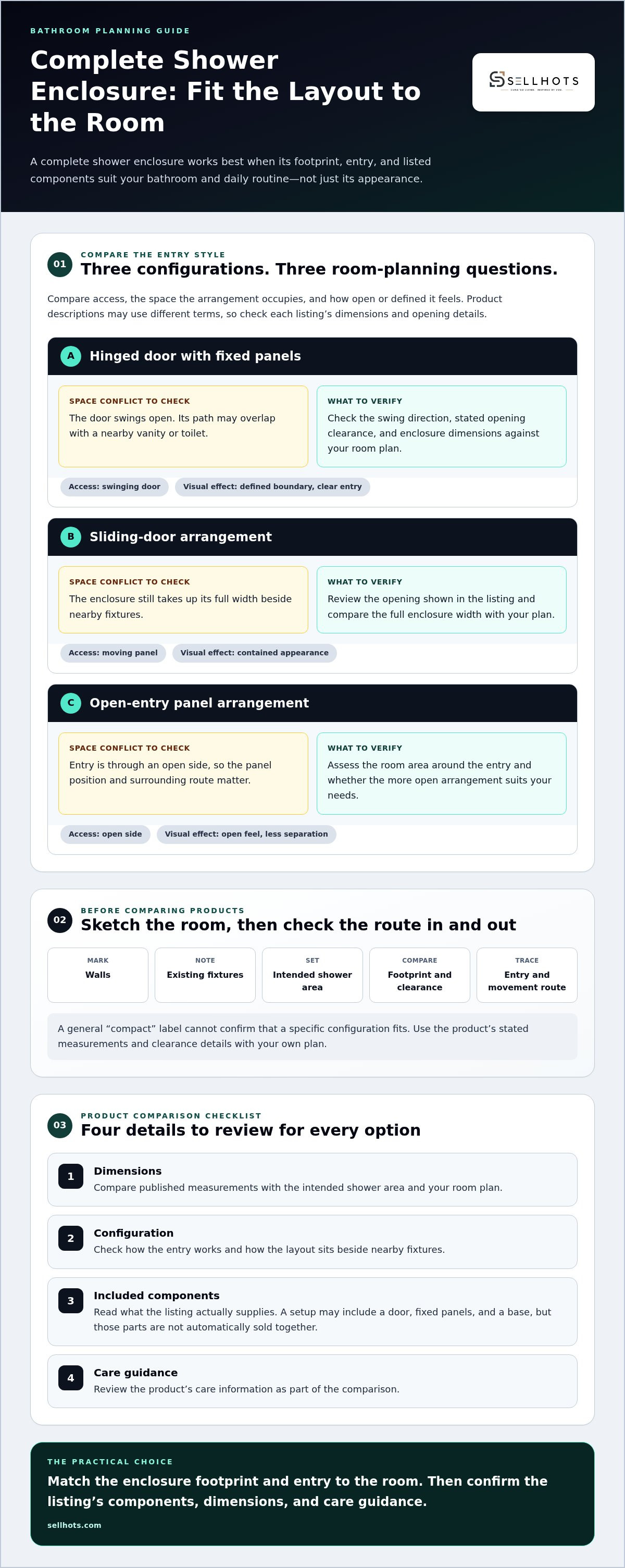
A complete shower enclosure should suit both the shape of your bathroom and the way you enter and move through it. In a compact room, a door’s opening path can matter as much as the shower’s footprint. Compare the layout with nearby fixtures and the route you need to move through the room instead of choosing by appearance alone.
| Configuration | Access | Room footprint to consider | Visual effect |
|---|---|---|---|
| Hinged door with fixed panels | The door swings open; check its direction and clearance. | Allow for the door’s stated opening space as well as the enclosure dimensions. | A defined boundary with a clear entry point. |
| Sliding-door arrangement | Access is through a moving panel; review the opening shown in the listing. | Consider the enclosure’s full width and how it sits beside nearby fixtures. | A more contained appearance, with panels forming the shower boundary. |
| Open-entry panel arrangement | Entry is through an open side rather than a door. | Consider the panel position and the room area around the entry. | A visually open feel, with less separation from the rest of the bathroom. |
These are broad arrangement categories, and product descriptions may use different terms. Use the table as a starting point, then compare the specific product’s stated dimensions and opening clearance. A hinged door may overlap with a nearby vanity or toilet when it swings open. A sliding or open-entry layout avoids that particular swing path, but still needs to leave a comfortable route through the room.
What should compact-bathroom shoppers prioritize?
Start with a simple plan showing the walls, existing fixtures, and intended showering area. Mark the enclosure footprint, then note the entry path and the space needed to move around it. Compare each product’s stated dimensions and clearance details with your plan. A general “compact” label cannot tell you whether a specific configuration will fit.
Design matters, too. An open arrangement can keep the room feeling visually connected, while a more enclosed layout can create a clearer sense of separation and privacy. Neither is right for every bathroom. Balance the look you prefer with the room’s layout and your everyday access needs. If accessibility is part of your planning, consult the U.S. Access Board’s ADA accessibility guidelines for relevant design guidance.
For a closer look at the room-planning decisions involved, continue with a compact-bathroom enclosure buying guide. Once you’ve narrowed down the layout, browse bathroom and shower products with a clearer idea of the configuration your space calls for.
What Should You Compare Before Buying a Complete Shower Enclosure?
Compare a complete shower enclosure by how its stated dimensions, configuration, contents, and care guidance suit your bathroom and daily routine. Product images can help you picture the finished space, but the written details let you assess whether an option is appropriate for your layout. Use the same checklist for each product to make differences easier to spot.
Four useful comparison criteria: dimensions, configuration, included components, and care guidance.
- Dimensions: Compare the product’s published measurements with the intended shower area and your room plan.
- Configuration: Check the described door and panel arrangement against the bathroom layout and available access space.
- Stated contents: Note which components the listing says are included instead of assuming the pictured setup comes as a complete package.
- Care guidance: Review the stated cleaning and maintenance recommendations as part of everyday usability.
Which dimensions and compatibility details deserve attention?
Measure the intended area and compare it with the dimensions given for the specific product. Then check whether the described configuration works with the existing shower area, nearby fixtures, and available opening space. Fit depends on both the enclosure and the room, so do not rely on broad labels or assumptions about compatibility. If the listing includes compatibility details, read them alongside the measurements before narrowing your options.
How do materials, finishes, and care needs affect the choice?
Compare the materials and finishes named in each product description. A stated finish can help you judge how the enclosure may look alongside existing fixtures, hardware, and bathroom surfaces. You do not need to match every detail exactly. Aim for a considered relationship between what is already in the room and the look you want to create.
Care guidance is another practical point of comparison. Review the product’s instructions and consider whether they suit the way you prefer to maintain your bathroom. Materials with a similar appearance may have different care needs, so use the product-specific guidance when comparing options. This makes it easier to weigh appearance against the routines of everyday use.
For broader questions about requirements that may apply to a bathroom project, consult relevant building code safety standards resources. Keep that research separate from product specifications: the listing describes the product, while applicable requirements depend on the project and location. These checks help you compare options by suitability and stated details, not appearance alone.
How Can You Plan for a Smooth Shower Enclosure Purchase?
Plan a complete shower enclosure purchase by moving from the room itself to the product details in a clear sequence. Map the space, identify access needs, compare product listings, and review what each option says it includes. A simple sketch can help you see how the measurements, fixtures, and entry space relate before you choose.
A useful preparation rule: map the room, define access, compare the listed details, and review the stated contents before choosing.
What should you measure and note before comparing products?
Begin with a room sketch showing the showering area, surrounding walls, doorways, and existing fixtures. Record the available width and depth, as well as obstacles that may affect the enclosure or the route into it. Note how you need to approach and enter the shower, including the opening direction of nearby doors. These details give you a practical reference for comparing products.
Use your measurements to compare the published dimensions for each option. They help you assess whether the stated footprint suits the space, but they cannot fill in specifications a listing does not provide. Keep the sketch nearby as you review configurations so that you compare each one against the same room plan rather than relying on memory.
How can you reduce uncertainty before checkout?
Review each product page systematically. Check its stated dimensions and configuration, read which components are included, and note the care guidance. A short comparison list keeps those criteria visible as you weigh your options. If a detail is important to your decision but is not described, do not infer it from a photo or from another product’s listing.
- Room measurements and obstacles noted on a sketch
- Access needs identified in relation to fixtures and doorways
- Published dimensions and configuration compared with the plan
- Stated components and care guidance reviewed for each option
Buying a shower product and arranging its physical installation are separate decisions. Product selection helps you clarify what you’re considering, but it does not determine how the item will be installed. Focus first on choosing an option whose listed details suit your room.
SellHots offers a customer-first shopping experience and secure checkout for browsing bathroom products. Once your comparison list is ready, explore shower systems as a related category when planning a cohesive bathroom.
How Can a Complete Shower Enclosure Bring Cohesion to Your Bathroom?
A complete shower enclosure brings cohesion when its fit, everyday function, stated product details, and visual character work together. Start with the room’s dimensions and access needs, then compare the listed configuration and contents. Once those practical considerations are clear, choose a look that feels at home with the rest of the bathroom.
A well-considered enclosure balances room fit, everyday function, and design.
How can the enclosure work with the rest of the bathroom?
Think of the enclosure as one part of the room’s overall composition. Its visual character can relate to existing fixtures, hardware, and surfaces without matching every element exactly. Consider whether the design suits the bathroom you have or the atmosphere you hope to create. A calm, cohesive result often comes from a few intentional choices rather than extra ornament.
Keep practical needs at the center. An appealing finish cannot make up for a layout that restricts comfortable access, just as a suitable configuration may feel less harmonious if it clashes with the room’s established palette. When planning a broader bathroom update, a freestanding bathtub buying guide can offer useful ideas for considering another major fixture alongside your shower area.
SellHots offers integral shower rooms and shower systems as related categories to explore while shaping the space. They serve different roles: an integral shower room is a broader showering-space option, while a shower system refers to water-delivery fixtures. Comparing each category on its own terms helps keep your choices clear as you plan a coordinated bathroom.
What is the simplest next step for choosing confidently?
Return to your room sketch and measurements. Compare them with the published dimensions and configuration for each option, then review the product’s stated contents and care details. This final pass helps you assess whether an enclosure suits your requirements and complements the design direction you’ve chosen.
With your priorities in hand, browse SellHots’ shower-related categories, including integral shower rooms and shower systems, to explore bathroom products for your plans. Let the room guide your choice, then weigh usability and visual harmony together.
Choose a Shower Enclosure with Confidence
A complete shower enclosure is a considered choice when it fits your bathroom, supports everyday use, and feels at home in the overall design. Begin with the room’s measurements and access needs, then compare each product’s configuration, stated contents, and care guidance. These details make it easier to distinguish a visually appealing option from one that also suits your space.
Keep the wider bathroom in view, too. Coordinating the enclosure with existing fixtures and surfaces can create a calm, cohesive feel without adding unnecessary detail. SellHots curates bathroom and home-decor products, including shower-related options, with secure checkout and customer-first support as part of the shopping experience.
Revisit your measurements and compare product information against your priorities. Explore shower solutions at SellHots and take the next step toward a bathroom that feels thoughtfully put together.
Frequently Asked Questions
What is included in a complete shower enclosure?
A complete shower enclosure may include a coordinated combination of doors, fixed panels, and a shower base, but contents vary by product. The word “complete” alone does not establish what comes in the package. Read the product listing for its stated components and any compatibility details, and distinguish included parts from anything else your bathroom setup may require.
How do I choose the right size shower enclosure?
Measure the intended shower area and compare your available width and depth with the product’s published dimensions. Also note nearby fixtures, doorways, and the space needed to enter and move comfortably. A room sketch can make these relationships easier to assess. Use the specific measurements and configuration in each listing, since fit depends on both the selected product and your bathroom layout.
Are complete shower enclosures suitable for small bathrooms?
Some complete shower enclosures may suit a small bathroom if their dimensions and access arrangement work with the room. Compare the enclosure’s footprint with the space around nearby fixtures, and consider how its door or opening affects movement. Do not rely on a “compact” label alone. Review the product’s stated measurements and configuration against your room plan before choosing.
What is the difference between a shower enclosure and a shower room?
A shower enclosure is the boundary around a showering area, typically formed by elements such as a door and panels. A shower room refers to a broader, more integrated showering space. A shower system is different again: it generally describes water-delivery fixtures rather than the enclosure boundary. Keeping these terms distinct makes it easier to compare products that serve different roles.
How do I compare shower enclosure doors and layouts?
Compare hinged, sliding, and open-entry arrangements by how they affect access in your bathroom. A hinged door needs room for its swing, while a sliding arrangement uses a moving panel; an open-entry design leaves a side accessible without a door. Check the product’s terminology, stated dimensions, and any opening-clearance details, then consider nearby fixtures and the route you’ll use to enter.
How do I clean and maintain a shower enclosure?
Follow the care and cleaning guidance provided for the specific product. Materials and finishes can differ, so do not assume that similar-looking enclosures have identical care needs. Check the listing or product instructions for recommended cleaning practices and finish guidance. Including care requirements in your comparison helps you choose an option that suits your preferred bathroom routine.
Can I install a complete shower enclosure myself?
Whether DIY installation is appropriate depends on the specific product instructions, your experience, and the work required in your bathroom. Review the instructions and stated requirements before deciding, and consider whether you have the skills and tools for the task. Purchasing an enclosure and installing it are separate decisions, so choosing a product does not establish how it should be installed.