


Freestanding bathtubs can bring calm and intention to a bathroom, but the most striking silhouette isn’t always the right fit. The best choice balances your room’s layout with the way you like to bathe.
It’s easy to be drawn to a sculptural shape or deep, inviting basin. Yet freestanding bathtubs also call for practical consideration: how much floor space they occupy, whether you can clean around them easily, and whether the plumbing, delivery route, and access work for your home.
This guide explains how to compare styles, shapes, and materials, and what to measure or confirm before buying. You’ll be better equipped to shortlist a tub that suits both your bathroom and your routine.
Key Takeaways
- Compare freestanding bathtubs by how their shape, bathing space, and material suit your comfort and care preferences.
- Look beyond the tub’s outer dimensions. Product drawings can help you assess usable interior space.
- Weigh the design impact of a freestanding tub against the practical advantages of a built-in format, including cleaning access and plumbing location.
- Before purchasing, measure the intended footprint, circulation space, doorway route, and delivery path.
- Confirm product details and installation requirements before choosing a tub for your bathroom and routine.
Freestanding Bathtubs: What They Offer and What to Consider First
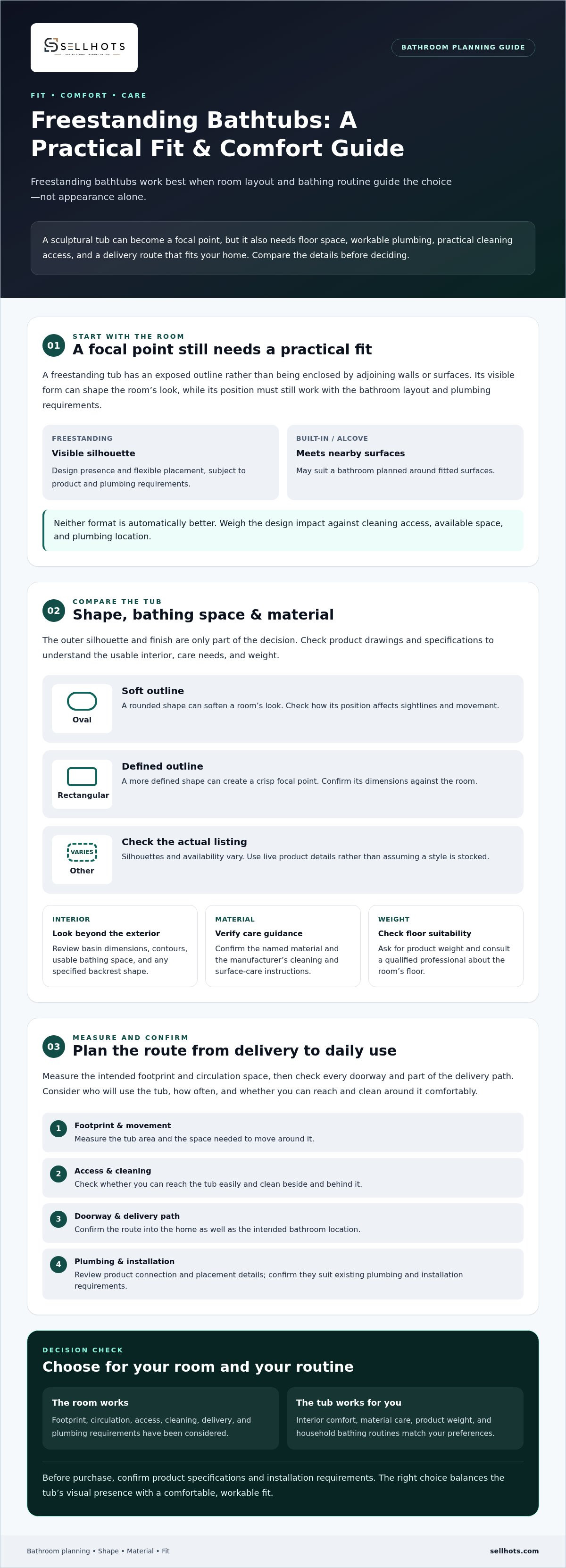
Freestanding bathtubs stand apart from surrounding walls rather than being built into an alcove or enclosed by adjoining surfaces. Their exposed outline gives the bathroom a distinct focal point, and their placement may offer more design flexibility than a tub fitted against a wall. The right position still depends on the room, the product, and its plumbing requirements.
The appeal is visual, but the decision is practical too. An open silhouette can make a tub feel like a considered piece of furniture, especially when its shape is visible from the doorway. Before choosing one, consider its floor-space requirements, how easily you can clean around it, who will use it, and where the drain and faucet need to be. The history of bathtubs offers a wider view of how bathing fixtures and styles have evolved, but your layout and routine should guide your decision.
How a freestanding bathtub differs from other bathtub styles
A freestanding tub has a standalone profile, with its exterior visible rather than concealed by a surrounding deck or wall. Built-in and alcove tubs, by contrast, are designed to meet or sit within nearby surfaces. Neither format is automatically better. A built-in design may suit a bathroom planned around fitted surfaces, while a freestanding option may appeal if you want the tub’s form to be seen.
Requirements vary by tub and bathroom. Check the manufacturer’s product information for connection and placement details, then confirm that they work with the room’s existing plumbing. A tub’s appearance alone can’t tell you whether it’s a practical match.
Who may find a freestanding tub appealing?
This style may suit shoppers who want bathing to feel like a dedicated part of the room, rather than simply another fixture. It can be an appealing choice if you enjoy soaking and want a design feature that shapes the bathroom’s overall mood.
A spacious-looking room doesn’t guarantee a comfortable fit. Picture the tub in place and consider whether you can move around it, reach it easily, and clean the surfaces beside and behind it. Think about household routines too: who’ll use the tub, how often, and whether its position and upkeep make sense day to day. Those answers can help you decide whether its visual presence is worth the space and care it requires.
Freestanding Bathtub Shapes, Materials, and Comfort: What to Compare
Freestanding bathtubs come in a range of silhouettes and material finishes, but a polished exterior doesn’t tell you how comfortable a tub will feel in use. Compare the visible shell with the interior contours, care instructions, and product specifications before settling on a design.
Which bathtub shape suits your room and bathing preferences?
Oval, rectangular, and other silhouettes create different visual effects. A rounded outline can soften a room’s look, while a more defined shape can create a crisp focal point. These are broad design categories, not a guarantee of what a retailer currently stocks. Check live listings for available options, then consider sightlines and how the tub’s position will affect movement through the room.
Exterior dimensions alone don’t establish bathing comfort. Check the interior shape and usable bathing space in the product drawings. Look for details such as the basin’s contours and backrest shape, if specified, and compare them with how you prefer to sit or recline. Two tubs with similar outside measurements may offer different interior space.
How to compare bathtub materials and care requirements
Use the material named in the product specifications rather than guessing from a photo or finish. Compare the manufacturer’s guidance for cleaning, surface care, handling, and durability. A design that looks appealing should also suit the time and attention you’re prepared to give it. For background on common bathtub materials, consult Homes & Gardens, then verify the details for the specific tub you’re considering.
Weight matters beyond delivery. Ask the manufacturer for the tub’s weight and consult a qualified professional about floor suitability, especially if you’re considering a heavier material or have questions about the room’s structure. Don’t assume that appearance indicates weight or care requirements.
| What to compare | Question to ask | Details to verify |
|---|---|---|
| Shape | Does the silhouette work with the room and bathing routine? | Interior contours, basin dimensions, and product drawings |
| Material | Does the surface suit your care preferences? | Named material and manufacturer cleaning guidance |
| Weight | Can the room accommodate the tub as planned? | Product weight and professional floor-suitability assessment |
Once you know which details matter, explore SellHots’ bathtub and home products and check each listing for confirmed specifications.
Freestanding Bathtubs Compared: Match the Design to Your Priorities
Freestanding bathtubs create a distinct visual feature, but their standalone appearance doesn’t guarantee easy placement or a simpler project. The right format depends on how the tub will sit in your room, connect with existing plumbing, and fit your household’s everyday needs.
Freestanding versus built-in: which trade-offs matter most?
A freestanding tub keeps its exterior visible and may allow more choice in where it sits, provided the plumbing and room layout support that position. A built-in tub is designed to meet or sit within surrounding surfaces, giving it a more integrated look. Neither format is universally better. Compare the visual effect you want with the space and practical considerations each option brings.
| Format | Potential advantages | Trade-offs to consider |
|---|---|---|
| Freestanding | Its visible form can become a defining design feature, and placement may be more flexible. | Check floor area, plumbing location, cleaning access, and the product’s exact requirements. |
| Built-in | It integrates with nearby bathroom surfaces for a more contained appearance. | Consider how the surrounding surfaces shape the design and affect access for care or cleaning. |
Think about how the room functions, not only how it looks in a finished photograph. The drain and faucet positions may influence where a freestanding tub can go, while available floor area affects how it relates to other fixtures and circulation. Confirm the product’s connection and placement requirements with the manufacturer rather than assuming a standalone design can go anywhere.
Is a freestanding bathtub practical for your household?
Start with the people who’ll use it. Consider how often they bathe, whether the tub’s entry and interior shape feel comfortable, and how the surrounding area will work in daily routines. Cleaning around the tub is another practical consideration: an exposed exterior may require attention to the floor and surfaces beside or behind it. That’s a maintenance preference to weigh, not a reason to rule out the style.
Before deciding, verify the product’s outside dimensions and compare them with the intended location. Check the route the tub must travel into the bathroom, along with its care instructions and plumbing details. These checks help reveal whether the focal point will also work for your household. A built-in tub may better suit a layout organized around surrounding surfaces; a freestanding one may be worth considering if its presence and placement fit the room and your routine.
Plan for a Freestanding Bathtub: Measure, Check, and Confirm
Freestanding bathtubs need more than a promising spot on the floor. Check the room, access route, product details, and site requirements before ordering. Final fit depends on both the product’s dimensions and the conditions at the installation site. Use this checklist to separate measurements you can take yourself from questions that need a qualified professional.
What should you measure before ordering?
- Map the proposed location. Measure the space the tub will occupy and note nearby fixtures, doors, and the paths people use to move through the room. Consider how the tub’s position affects everyday access and cleaning.
- Compare the product drawings with your plan. Check the selected model’s exterior dimensions against your bathroom measurements. Review interior dimensions too, since the bathing space may differ from the outer footprint.
- Trace the delivery route. Measure the doorway route and delivery path from the drop-off point to the bathroom. Include turns and access constraints that could affect moving the product into place. Confirm delivery terms with the seller before ordering.
These measurements can help you spot potential issues early, but they can’t confirm every site condition. Keep the product drawings and your room measurements together so a professional can review the specific model you’ve chosen.
What should a professional confirm before installation?
- Plumbing connections: Ask a qualified plumbing professional to assess the supply, waste, and connection requirements for the chosen tub. Confirm whether the existing setup suits the product and what site-specific preparation may be needed.
- Floor and access suitability: Have a qualified professional assess whether the floor and access conditions are appropriate for the selected product. Share the manufacturer’s product information, including its stated weight, so the assessment is based on the actual tub.
- Handling and responsibilities: Check the manufacturer’s handling instructions and confirm delivery terms, including what happens at delivery. Before ordering, clarify who will arrange and carry out installation. SellHots sells bathroom products, including bathtubs, but doesn’t provide installation services.
A successful floor-plan sketch doesn’t confirm that the tub is ready to fit. Product dimensions, plumbing connections, floor conditions, and the route into the room all need to be considered together. Once you’ve identified a style that suits your space, explore SellHots’ bathtub products and confirm the details of any listing before you buy.
Choose Your Freestanding Bathtub with Confidence and Explore SellHots
Choose freestanding bathtubs by balancing room fit, bathing comfort, design, care needs, and verified installation requirements. Use those priorities to compare product details and build a shortlist that suits your home.
A final checklist for comparing freestanding bathtub listings
- Fit: Compare the listing’s exterior dimensions with your measurements, then review interior dimensions or drawings to understand the usable bathing space.
- Shape and comfort: Consider the interior contours and how the tub’s form suits your bathing routine. Don’t rely on the exterior silhouette alone.
- Material and care: Confirm the stated material, read the manufacturer’s care instructions, and check any handling guidance.
- Included components: Review the listing to see what’s included. Don’t assume faucets, waste fittings, or other components come with the tub unless stated.
- Installation requirements: Compare product information with site conditions and advice from a qualified professional. Confirm plumbing and floor suitability before ordering.
- Purchase details: Check current availability, delivery terms, and return information directly on the live store page.
Use the same checklist for each option. Comparing verified details makes it easier to weigh practical fit alongside design and comfort.
Where to continue your product search
SellHots is an online marketplace offering bathtubs and other bathroom products. Check the live store page for current bathtub listings, then verify each product’s name, specifications, and availability before treating it as a match for your needs.
Review the product information before deciding whether a listing is right for your project. To continue your search, explore products at SellHots and compare the details at your own pace.
Make Your Final Choice with Confidence
The best freestanding bathtubs balance your room’s layout with the way you want to bathe. Before deciding, compare each option’s dimensions, interior comfort, material and care guidance, then confirm plumbing, floor suitability, delivery access, and installation responsibilities for your chosen model.
With your priorities clear, review current product information. SellHots offers bathtubs and hot tubs as product categories, so check the live page to see whether a suitable bathtub and its specifications are available. The store describes its checkout as secure and its support as customer-first.
Explore products at SellHots, and verify the details that matter to your bathroom and routine before you buy. A thoughtful choice can bring everyday comfort and a more intentional sense of calm to your space.
Frequently Asked Questions
Is a freestanding bathtub suitable for a small bathroom?
It can be, but the fit depends on the tub’s dimensions, room layout, and usable space around it. Measure the intended footprint and note nearby fixtures, doors, and movement paths before choosing. Check the delivery route too, including turns and access constraints. A floor plan can help you assess the layout, while a professional can identify practical site issues that photographs may not reveal. Even a compact room needs careful planning.
How do I choose the right size freestanding bathtub?
Start by measuring the bathroom, then compare those measurements with the product’s exterior dimensions and interior bathing area. Consider the space needed to move around the tub, nearby doors and fixtures, and the route from the delivery point. Don’t assume one size will suit every household. Review the listing and product drawings, and consider whether the interior shape and bathing space feel comfortable for the people who’ll use it.
Are freestanding bathtubs difficult to install?
Installation requirements vary with the selected tub and the existing bathroom. Plumbing connections, site preparation, delivery access, and floor suitability may all need review. Read the manufacturer’s instructions and ask a qualified plumbing professional to assess the proposed location before ordering. SellHots sells bathroom products, including bathtubs, but doesn’t provide installation services. Confirm in advance who’ll arrange and complete the work, and what the product listing says is included.
What should I check before buying a freestanding bathtub?
Review the product’s exterior and interior dimensions, stated material, care instructions, included components, delivery terms, and installation requirements. Compare these details with your bathroom measurements and bathing preferences. If the plumbing connections or floor suitability are uncertain, get professional advice before purchasing. Check the live listing for current availability and return information, since these details should be verified directly rather than assumed from general product descriptions.
Which material is best for a freestanding bathtub?
There’s no single best material for every shopper. Compare only materials explicitly identified in the product listing, then review the manufacturer’s care, handling, and durability information. Think about the surface feel you prefer and the maintenance you’re comfortable with. If you have questions about the tub’s weight or suitability for your bathroom, check the product information and seek advice from a qualified professional before deciding.
Can a freestanding bathtub go anywhere in a bathroom?
No. Placement depends on the room layout, plumbing connections, product requirements, delivery access, and site conditions. A freestanding design may allow more placement options than a tub fitted within surrounding surfaces, but that doesn’t mean every location will work. Review the manufacturer’s instructions and ask a qualified professional to confirm the proposed position before purchase or installation. Consider access around the tub as part of the layout, not just its footprint.
How do I keep a freestanding bathtub clean?
Follow the care instructions for the specific tub material and finish. Consider cleaning access around the exterior when choosing its position, since the floor and nearby surfaces may need regular attention. Don’t assume a cleaner, tool, or treatment is safe for every surface. Check the manufacturer’s guidance before using it, especially if the product information specifies particular care methods or cautions about protecting the finish.