


An all-in-one shower unit can give your bathroom a coordinated look, but the term can mean different combinations of components. It’s easy to confuse a shower unit with a shower enclosure or a shower system, so start by checking what the design actually brings together. A complete arrangement may include several core shower components, but the specific elements vary by product.
Before choosing, picture how the arrangement will work in your space. A prefabricated unit may offer a more unified alternative to selecting a base, walls and enclosure separately, but its dimensions, configuration and appearance still need to suit your bathroom. This guide explains the main components, compares integrated and separately selected setups, and outlines practical details to review, from room measurements and access to finishes and cleaning. With those details in mind, you can assess whether an integrated shower design offers the right balance of coordination, function and choice for your home.
Key Takeaways
- An all-in-one shower unit brings compatible shower components into a coordinated arrangement, but the exact combination varies.
- Consider the enclosure, base, walls and fixtures separately to understand how each contributes to the shower’s structure, water delivery and appearance.
- Compare integrated and separately selected components by weighing coordination, choice and the number of elements you’ll need to plan.
- Measure usable floor space, review access and note existing fixture positions before comparing configurations.
- Check how the shower’s components work together and whether their surfaces suit your preferred cleaning routine.
What Is an All-in-One Shower Unit?
An all-in-one shower unit is a coordinated shower space made from components designed to work together. The term generally describes an arrangement of compatible parts, rather than one fixed product with identical features in every design. Depending on the configuration, it may bring together the shower’s enclosure, surfaces and water-delivery fixtures.
Coordinating these elements can make the finished shower feel visually composed, with parts selected to suit one another in function and appearance. The exact combination matters: the label alone doesn’t tell you what’s included. Review the product details and component list to compare options accurately and understand what forms the complete shower area.
Which components may form an integrated shower space?
A coordinated arrangement may include an enclosure, a shower base, wall panels and shower fixtures. Each has a distinct role: the base forms the shower floor, walls provide surrounding surfaces, an enclosure creates a boundary, and fixtures direct and control the water. Some configurations combine several of these elements, while others cover only part of the overall arrangement.
When compatible components share a finish or design language, they can create a cohesive look. For example, a base and wall treatment selected to complement each other can make the shower feel intentional, while the enclosure and fixtures complete the composition. For general background on stall showers, see the different forms an enclosed shower can take. The components in a particular unit still depend on its design.
How is a shower unit different from a shower system?
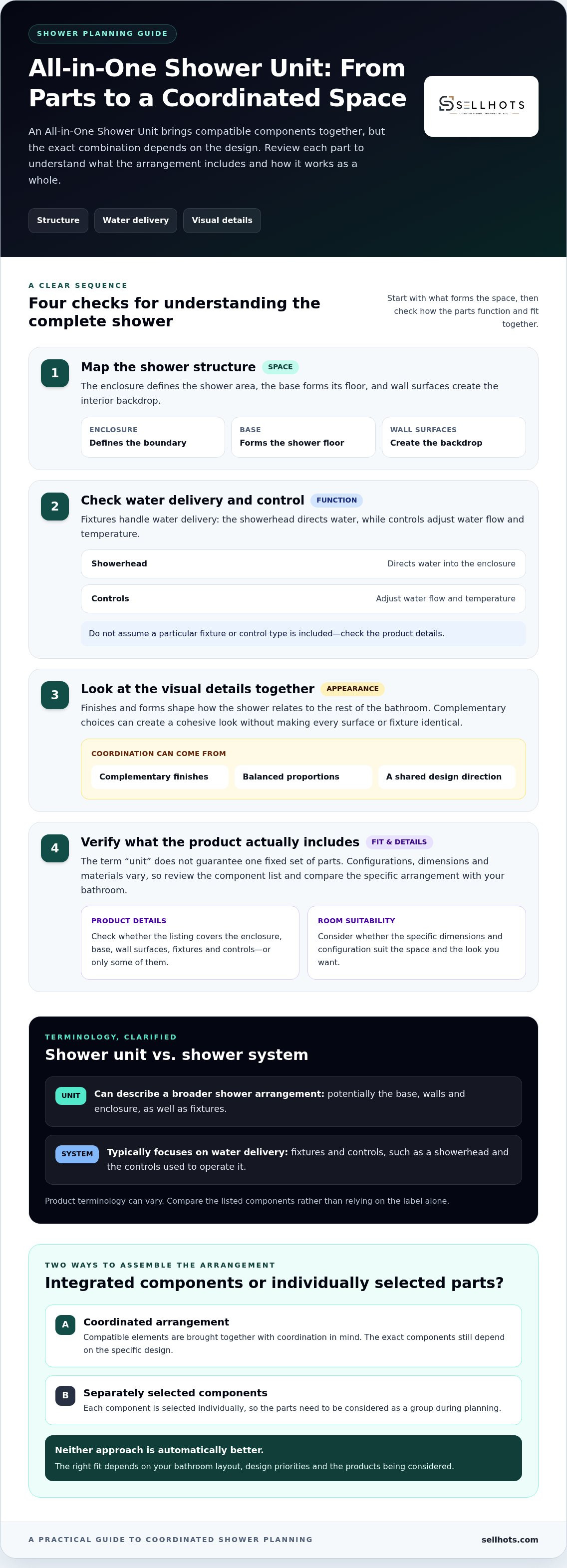
A shower system typically refers to the fixtures and controls that deliver water, such as a showerhead and the controls used to operate it. A shower unit can describe a broader enclosed shower arrangement, potentially including the base, walls and enclosure as well as the fixtures. In short, a system focuses on water delivery, while a unit can refer to more of the surrounding shower space.
Product terminology can vary, so compare the listed components rather than relying on a label alone. Check whether a description covers fixtures and controls or a more complete arrangement of surrounding surfaces and structure. This distinction also helps explain how Integral Shower Rooms and Shower Systems represent different ways to explore a coordinated bathroom design. Knowing what each option brings together makes it easier to assess how it could fit your room.
How an All-in-One Shower Unit Brings the Bathroom Together
An all-in-one shower unit brings the surrounding structure, water-delivery fixtures and visual details into one considered arrangement. Each part has a different job, but planning them together can help the shower feel composed rather than assembled from unrelated choices. The goal isn’t to assume that every component comes in a single package. It’s to understand how the parts can work together in the finished bathroom.
The enclosure, base, and wall surfaces
The enclosure defines the shower area and separates it from the rest of the room. The base forms the floor within that space, while the wall surfaces create its backdrop and protect the surrounding area from direct water exposure. Together, these structural elements establish the shower’s outline and give its interior a finished appearance.
Planning these components as a group helps you consider how their proportions and finishes relate. A base and wall treatment chosen to complement each other, for instance, can look more unified than finishes selected without reference to one another. Dimensions, materials and configurations vary, so the fit and overall appearance depend on the specific combination.
The shower fixtures and controls
Fixtures handle water delivery. A showerhead directs water into the enclosure, while controls let the user adjust water flow and temperature. Their placement and appearance contribute to the shower’s use and visual balance. Check the product details rather than assuming a particular fixture or control type comes with every configuration.
It can help to sort the components into three groups:
- Structure: the enclosure, base and wall surfaces define the shower space.
- Water delivery: the showerhead and controls direct and regulate the water.
- Visual details: finishes and forms shape how the shower relates to the rest of the bathroom.
This separation makes comparisons clearer. First consider how the shower area is formed, then how water is delivered, and finally whether the visible elements suit the bathroom. Coordinated choices can avoid the appearance of mismatched finishes, but coordination doesn’t require every surface or fixture to be identical. A shared design direction, balanced proportions or complementary finishes can create a calm, intentional result.
SellHots offers Integral Shower Rooms and Shower Systems as two relevant product categories to explore. One relates to the broader shower space, while the other focuses on water-delivery fixtures. Comparing their roles can help you decide which elements you want to coordinate as you plan a bathroom that feels cohesive and suits your preferences.
All-in-One Shower Unit vs. Separate Shower Components
An all-in-one shower unit brings compatible elements into a coordinated arrangement, while a separately assembled shower lets you select components individually. Neither approach is automatically better. The right fit depends on your bathroom layout, design priorities and the products you’re considering. Compare the trade-offs to decide how much coordination you want built in and how much choice you prefer to manage.
| Consideration | Integrated arrangement | Separate components |
|---|---|---|
| Coordination | Components are selected as a compatible group, which can make it easier to create a unified look. | You choose how elements relate, giving you control over finishes but more matching decisions. |
| Choice | Choices follow the available configurations and their included elements. | Individual selection may offer more flexibility in choosing specific parts. |
| Planning | Review the arrangement and its listed components as a coordinated option. | Plan each component and consider how it will work with the others. |
Coordination can simplify matching components, but it doesn’t guarantee an easier installation. The room layout, products selected and work involved all matter. Focus on what the arrangement includes and how it suits the space rather than assuming that an integrated label settles every practical question.
When does an integrated unit make sense?
An integrated arrangement may appeal if you want the shower to feel considered as a whole and prefer to compare connected components together. You might value seeing the enclosure, base and wall surfaces presented within one design direction. This can reduce the number of matching decisions, while you still need to assess whether the configuration suits your space and preferences.
When might separate components suit a project?
Separate selection may suit you if you want greater control over individual elements, such as choosing a particular surface treatment or fixture independently. That flexibility brings more decisions: each part needs to work with the others in function, fit and appearance. Pay particular attention to compatibility across the enclosure, base, walls and water-delivery fixtures.
Use the room’s layout as your deciding context. An integrated option may suit a preference for coordinated choices; separate components may better reflect a desire to shape each detail. Compare the actual configurations, then weigh the flexibility and coordination that feel right for your bathroom.
What to Assess Before Choosing an All-in-One Shower Unit
An all-in-one shower unit should fit the room as comfortably as it fits your design preferences. A measured plan helps you compare each configuration with the space, access and existing layout you have.
- Measure the usable floor space. Record the intended shower footprint and note nearby walls, fixtures and other features that could limit placement. Compare these measurements with the dimensions provided for each product.
- Review access. Consider how the enclosure opens, how much clearance its door movement needs, and whether entering and exiting feels comfortable. Note any obstructions that could affect access or everyday movement around the bathroom.
- Map the existing layout. Mark the positions of bathroom fixtures, water connections and drainage. These details help you understand how a proposed arrangement relates to the room, but don’t assume existing connections will suit every configuration.
- Compare configurations. Check each option’s dimensions and listed components against your notes. Confirm what is included, how the arrangement fits the measured footprint, and whether its features match your preferences.
How should you measure and review bathroom access?
Measure the planned shower area and note its relationship to nearby walls and fixtures. Then picture the enclosure in use: which way it opens, the clearance needed to enter and the space required to move around the bathroom. A simple sketch with measurements and obstructions marked can help you compare layouts and spot potential conflicts before settling on a configuration.
Which layout and care questions matter?
Include the positions of water connections and drainage in your layout notes, then consider how each product configuration relates to them. For routine care, review the surfaces, seams and manufacturer’s cleaning guidance. A design that looks appealing should also suit your maintenance preferences and leave the room feeling usable rather than crowded.
With these details in hand, you can compare integrated shower options more confidently. Explore integral shower room options as you weigh dimensions, access, component coordination and care.
Exploring All-in-One Shower Units for a More Coordinated Bathroom
An all-in-one shower unit describes a broader shower arrangement, while a shower system generally refers to the fixtures and controls that deliver water. Keeping that distinction in mind makes it easier to compare options by what they actually bring together. A coordinated space can feel composed, but the right choice still depends on how it fits your bathroom and daily routine.
How can a coordinated shower shape the room?
When the enclosure, base, wall surfaces and visible fixtures feel compatible, the shower can become a calm focal point rather than a collection of disconnected finishes. That doesn’t mean everything needs to match exactly. Cohesion can come from complementary surfaces, a repeated finish or a simple contrast that relates to the bathroom’s other fixtures.
Consider the shower in context. Its surfaces sit beside the rest of the room, so their color, texture and visual presence can influence how spacious or balanced the bathroom feels. A restrained palette may suit one interior, while a bolder contrast may work better in another. Let the room’s existing character guide your choices, while keeping usable floor space, comfortable entry and surface care in mind.
What is a useful next step for exploring options?
Bring your room measurements and layout notes to the comparison. Set the available space alongside each product’s stated dimensions, then read the description to identify which components are included. This helps distinguish a broader shower arrangement from a system focused on water delivery, and shows how a possible choice relates to access, existing fixtures and your preferred level of coordination.
Use a few questions to keep the decision grounded:
- Does the listed configuration fit the measured shower area?
- Can you move comfortably around the enclosure and enter it with ease?
- Do the included components align with the coordinated look you want?
- Are the surfaces and seams suited to your cleaning preferences?
SellHots offers Integral Shower Rooms and Shower Systems as relevant product categories, covering the shower space and its water-delivery fixtures. Review product descriptions and dimensions alongside your room plan, then explore SellHots bathroom products to find options that suit your design priorities.
Shape a Shower Space That Feels Just Right
An all-in-one shower unit can bring compatible components into a coordinated arrangement, while a shower system focuses on the fixtures and controls that deliver water. The right fit depends on your bathroom’s usable space, access, layout and preferred configuration.
Before choosing, compare product dimensions with your measurements and review the listed components. Consider how the enclosure will work in daily use, how its finishes relate to the room and whether its surfaces suit your care routine. A coordinated design can create a composed feel, while separately selected components may offer more individual choice.
SellHots offers Integral Shower Rooms and Shower Systems for exploring these different aspects of shower design. The marketplace also provides secure checkout and customer-first support as you browse bathroom products. Explore bathroom products at SellHots and compare options against your space and preferences to plan a functional, thoughtfully coordinated bathroom.
Frequently Asked Questions
What is usually included in an all-in-one shower unit?
There isn’t one fixed component list. A configuration may bring together an enclosure, shower base, wall panels and fixtures, while another may cover only some of these elements. Look for a specific list of components rather than relying on “all-in-one” alone. This helps you identify what the arrangement provides and which elements may need separate selection.
Are an all-in-one shower unit and a shower system the same thing?
Not necessarily. A shower system commonly refers to the fixtures and controls that deliver and regulate water. A shower unit can describe a broader arrangement that may also include the enclosure, base or wall surfaces. Product terminology can vary, so compare the components in each description to see whether a listing focuses on water-delivery fixtures or describes more of the overall shower space.
How do you measure for an all-in-one shower unit?
Measure the usable floor area and intended shower footprint, then note nearby walls, fixtures and obstructions. Consider the entry clearance and how the enclosure door would move, since both affect everyday access. Compare your measurements with the product dimensions and layout information. Record the positions of existing plumbing connections and drainage too, but don’t assume they’ll suit a particular configuration without reviewing the room and product details.
Can an all-in-one shower unit work in a small bathroom?
It may work in a compact bathroom, but suitability depends on the unit’s dimensions, entry design and space around existing fixtures. Measure the usable area, then consider how people move through the room and whether the enclosure allows comfortable access. Compare the product dimensions with your actual layout before deciding. A coordinated arrangement isn’t automatically space-saving; its specific configuration determines how well it fits.
Is an all-in-one shower unit easier to maintain than separate components?
Not necessarily. Maintenance depends on the surfaces, materials, seams and care instructions for the specific configuration. Bringing compatible elements together doesn’t guarantee less cleaning or upkeep. Review the product’s care guidance and consider whether its surfaces are accessible for routine cleaning. Then weigh those needs against your household’s preferences. Choosing with care requirements in mind can help make regular cleaning more manageable.