Space-Saving Furniture Ideas for Small Homes
Updated on: 2026-06-25
Small rooms demand smart planning, not guesswork. Space-saving furniture helps you keep daily routines smooth while improving how every square foot is used. The right pieces also reduce clutter and make storage feel effortless instead of stressful. In this guide, you will learn practical buying criteria, common mistakes to avoid, and planning steps that work for apartments, studios, and family homes.
Table of Contents
- Common Mistakes
- Buyer’s Checklist
- How to Plan a Layout for Compact Living
- Materials, Durability, and Maintenance
- Storage Strategy That Actually Works
- Measurements and Fit: The Hidden Variable
- FAQ
- Wrap-Up & Final Thoughts
Common Mistakes
Many shoppers start with style and finish with regret. When the first priority is appearance only, pieces often fail in real use. A sofa that looks compact can still block doorways if the clearance is not planned. A storage unit that is beautiful can feel inefficient if compartments are too shallow or poorly sized for daily items.
Another frequent error is underestimating movement space. In a small room, walking paths matter. It is common to focus on the furniture footprint but ignore how handles, drawers, and doors swing open. Even a small obstruction can make the room feel cramped every day.
Some buyers also overlook load capacity and hardware quality. Space-improving designs typically rely on hinges, slides, and locking mechanisms. If these components are thin or poorly made, the unit can loosen over time. That leads to a faster decline in both function and appearance.
Finally, people often buy isolated pieces instead of a coordinated system. For example, adding a storage coffee table without considering where cables, remotes, and chargers will live creates new clutter. The result is a room with more items but less organization.
Buyer’s Checklist
Use this checklist to choose pieces that deliver practical value in everyday life. Go through it before you decide, especially if your space is tight or you share rooms with multiple functions.
- Real dimensions: Confirm the width, depth, and height in the product details. Include the extra space needed for opening doors and pulling out drawers.
- Clearance plan: Measure entryways, walkways, and circulation space. Aim for comfortable access to kitchens, bathrooms, and bedroom doors.
- Storage usefulness: Check internal sizes, shelf adjustability, and compartment layout. Storage that cannot match your items becomes unused volume.
- Stability and support: Look for solid joinery, reinforced frames, and reliable mechanisms for lift-up tops, folding parts, or sliding components.
- Material and finish: Choose finishes that suit your cleaning habits. Consider scratch resistance and how dust collects on textured surfaces.
- Comfort and ergonomics: For seating, verify cushion thickness and seat depth for proper comfort during daily use.
- Maintenance requirements: Prefer easy-care surfaces when you have children, pets, or frequent visitors.
- Consistency of style: Select finishes and colors that match existing pieces so the room feels unified rather than cluttered.
Start with the highest-impact zones
Most small rooms feel best when you prioritize the zones you touch daily: the entry area, the living zone, and the main storage point. A compact unit that improves one routine can change how the entire room functions.

Checklist icons for compact dimensions and clearance
How to Plan a Layout for Compact Living
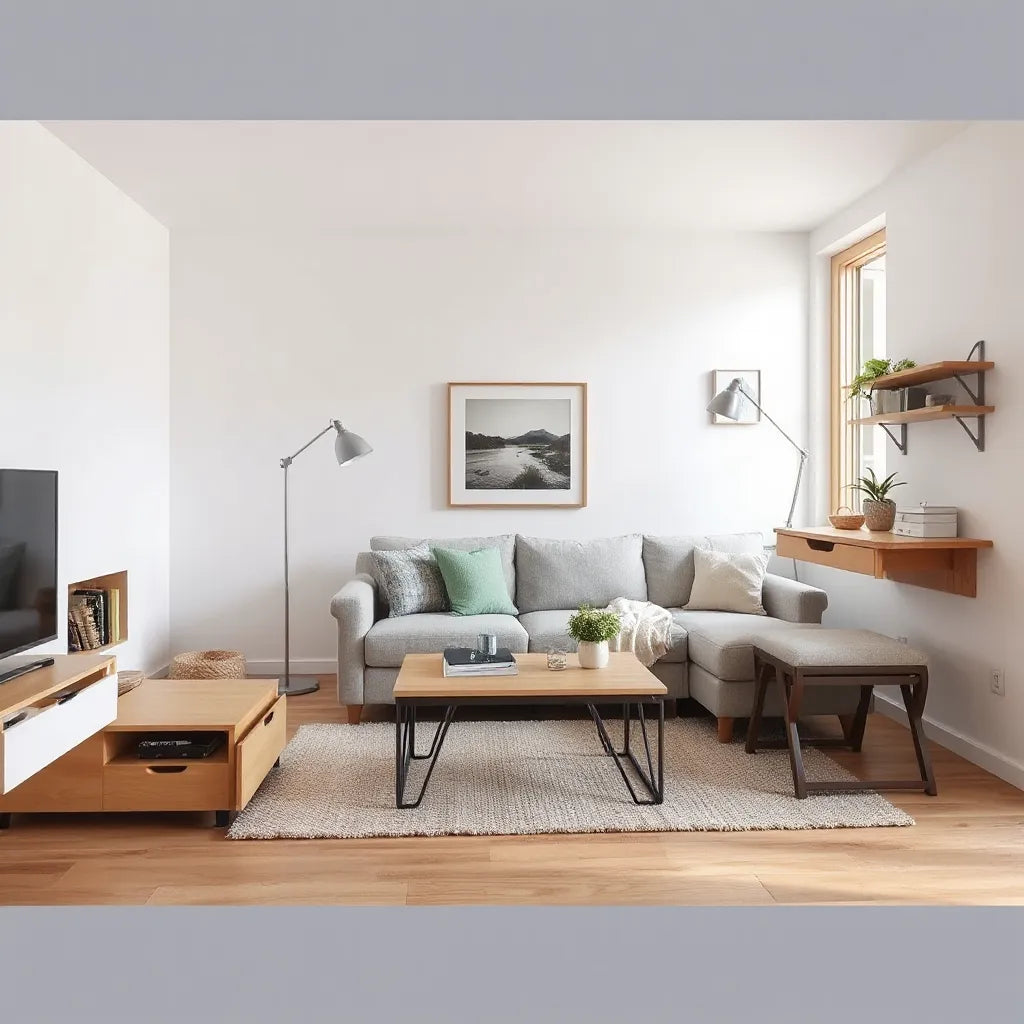
Space-saving furniture works best when it is placed with intention. Before you buy, outline the functions of each area. A studio may require sleeping, working, and cooking zones. A small living room may need seating, dining, and storage for media and small electronics.
Begin by drawing a simple floor plan. Mark the locations of fixed elements such as windows, radiators, and electrical outlets. Then mark the furniture you already own. Only after that, choose complementary pieces that do not force constant rearranging.
When you plan layout, keep these strategies in mind:
- Create one clear circulation lane: Keep a consistent walking path between rooms. Avoid placing tall items directly in that lane.
- Use multi-use surfaces: Choose tables that can serve as dining, work, or storage support. This reduces the number of separate items in the room.
- Balance visual weight: If a room has one large storage piece, counter it with lighter-looking elements such as open shelves or slim frames.
- Group similar utilities: Keep cables, chargers, and remote controls close to seating or the display area so items do not spread across the room.
- Plan for “peak” days: Even if you live alone, consider how the space behaves when guests visit.
Illustrative internal link: compact living concept
If you are designing a living area that needs both storage and display, a streamlined media console can anchor the room. For related inspiration, you can explore a minimal tv console collection on space-saving tv console options.
Materials, Durability, and Maintenance
Compact designs often include moving parts. That means material selection affects long-term performance. When surfaces degrade, the furniture stops looking compact and starts looking worn.
Consider the following material factors:
- Frame construction: Look for reinforced frames that resist wobbling. Stability is especially important for coffee tables, consoles, and lift-top designs.
- Surface protection: Durable finishes help prevent visible wear from everyday use. This includes water marks from glasses and friction from bags.
- Hardware quality: Drawer slides and hinge strength influence smooth operation. Better hardware also supports quieter use.
- Cleaning compatibility: Choose materials that match your cleaning routine. Smooth surfaces often require less effort and reduce dust buildup.
For kitchens and entry areas, you may want surfaces that tolerate frequent wiping. For bedrooms and home offices, prioritize comfort and easy cleaning around bedding, linens, and desk accessories.

Material icons showing durability, smooth cleaning, and stability
Storage Strategy That Actually Works
Space constraints create a simple question: where will items live when they are not in use? Storage should follow behavior. If you put items down in one spot, storage should support that habit.
Effective storage planning starts with categorization. Create groups based on how often you use each item: daily, weekly, and seasonal. Daily items need quick access. Weekly items can be stored in medium reach. Seasonal items can be placed higher or in less accessible compartments.
Next, match storage type to item shape:
- Drawers for small essentials: Socks, accessories, remotes, and chargers benefit from containment.
- Adjustable shelves for flexible needs: Books, storage bins, and folded textiles change size over time.
- Vertical storage for tall items: Binders, cleaning tools, and baskets often require height more than width.
- Hidden compartments for visual calm: When clutter stays out of sight, the room looks larger and more intentional.
Space-saving furniture becomes truly helpful when it supports hidden storage. A lift-top surface, a bench with internal space, or a compact console with concealed areas can prevent everyday mess from becoming permanent.
Do not ignore the “landing zone”
In small homes, people need one reliable location for belongings. A designated landing zone prevents items from accumulating on chairs, tables, and the floor. Choose a spot near entry or near the main seating area and keep it consistent.
Measurements and Fit: The Hidden Variable
The most costly mistakes often happen after purchasing. A piece may fit on the showroom floor but fail in your home due to door clearances, baseboards, or the need for cable routing. To prevent this, treat measurements as a first-class requirement.
Follow a measurement workflow that is consistent and repeatable:
- Measure the space twice: Verify width, depth, and height. Also measure diagonal clearance when space is narrow.
- Account for opening range: For drawers, doors, and lift mechanisms, measure the swing radius or pull-out distance.
- Consider access paths: A unit must be moved into position. Measure hallways and doorways if you plan to install large pieces.
- Plan for cable needs: If you have a media setup, confirm where power outlets and cable management will sit.
- Check for floor conditions: Uneven floors can affect stability. If your floor is not perfectly level, stability features become more important.
When measurements are correct, space-saving furniture feels seamless. When they are incorrect, even a small error multiplies into daily frustration.
Compatibility with Your Daily Routine
Before you decide, list your routines. Consider how you start and end the day. In many homes, the routine is predictable: morning coffee, charging devices, and preparing clothes or small items. Your furniture should support those patterns without requiring extra steps.
For example, a compact living area benefits when the coffee table or side table stores common items. That reduces the need to keep separate organizers. In a bedroom, storage benches and compact nightstand-style solutions reduce clutter on surfaces.
If you want inspiration for how storage-integrated designs can support a multi-functional room, you may also consider browsing a related smart and compact category from SellHots for home organization ideas.
Match function to form, not the other way around
Form matters, but it should serve function. A piece should either provide practical storage or reduce the number of items you need. If it does neither, its footprint is a cost.
FAQ
What types of space-saving furniture work best in a small living room?
Look for items that combine functions, such as lift-top coffee tables with concealed storage, media consoles with enclosed compartments, nesting or extendable tables, and seating pieces with internal space. These options support daily routines while reducing visible clutter.
How do I choose storage that fits my items?
Measure the items you store most often and compare those sizes with the internal dimensions of the storage compartments. Prioritize adjustable shelves for variable items and drawers for small essentials. Also consider how quickly you need to access each category, then assign the closest storage to the most used items.
Is it better to buy one larger storage piece or several smaller ones?
One larger piece can reduce the number of surfaces where clutter accumulates. However, several smaller pieces can provide flexibility when your layout changes over time. Select the option that matches your behavior and ensures each item has a consistent “home.”
What should I measure before purchasing compact furniture?
Measure the available width, depth, and height, plus the clearance required for openings such as drawers and doors. Also measure pathways for movement, and verify whether you need to remove packaging or manage cable routing during installation.
Wrap-Up & Final Thoughts
Choosing space-saving furniture is less about buying the smallest item and more about improving how your home functions. When you plan layout, verify dimensions, and prioritize storage that matches your routines, your room feels calmer and more usable. The best results come from selecting pieces with stable construction, practical compartments, and maintenance-friendly surfaces.
If you are ready to refine your setup, start with one high-impact zone and build from there. Apply the buyer’s checklist, confirm measurements, and select furniture that reduces daily friction. With a methodical approach, even a limited area can feel well organized, comfortable, and visually balanced.
Q&A Section
Below are additional practical answers to support your buying decisions.
How can I make a small room look larger with functional pieces?
Use hidden storage to reduce visible items, choose slimmer silhouettes for secondary furniture, and maintain consistent finishes across pieces. Also keep a clear circulation lane so the room supports movement without bottlenecks.
Do compact tables still provide enough surface for daily tasks?
Many compact tables are designed with multi-use surfaces or storage integration. To ensure adequacy, evaluate your daily task requirements, such as meal size, laptop use, or workspace needs, then compare those needs with the table dimensions and any extension capability.
What is the most common reason space-saving designs underperform?
Most underperformance comes from mismatched storage layout and insufficient clearance. A design can be well made yet still fail if it obstructs doors or if compartments do not support the size and frequency of your items.
About the Author
Written by SellHots , a team focused on home design guidance and smart shopping for compact living. Our expertise covers product selection criteria, layout planning principles, and practical storage strategy. We aim to help customers choose furniture that performs well in everyday environments. Thank you for reading, and we wish you success in building a more organized space.
The content in this blog post is intended for general information purposes only. It should not be considered as professional, medical, or legal advice. For specific guidance related to your situation, please consult a qualified professional. The store does not assume responsibility for any decisions made based on this information.